 Skip to main content
Coco coir vs rockwool for commercial greenhouses
A practical comparison of material properties, system fit, trial planning and the true cost per crop cycle.
Coco coir and rockwool can both be used in commercial greenhouse production. The useful question is not which material wins every comparison, but which specific product fits your crop, irrigation system and operating requirements.
This guide is a purchasing and trial-planning framework, not a promise of higher yields or a ready-made irrigation recipe. Compare exact products under your own conditions before changing a commercial crop programme.
What is different about the materials?
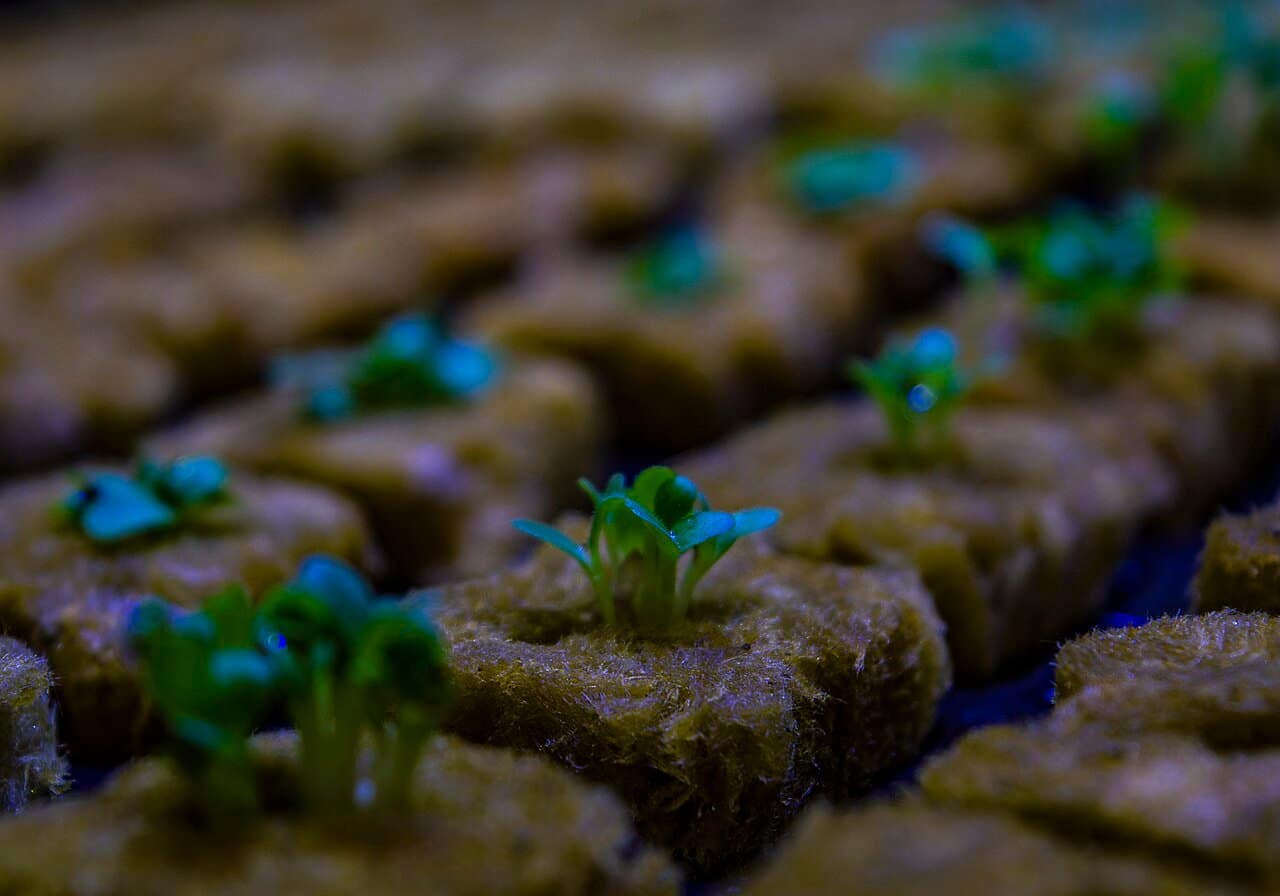
Coco coir comes from coconut husks. Rockwool, also called stone wool, is a manufactured mineral-fibre substrate. Commercial stone-wool systems include propagation plugs, blocks and growing slabs. These descriptions concern the material and format, not a guarantee of crop performance. See Grodan’s introduction to stone wool for the manufacturer’s description of its system.
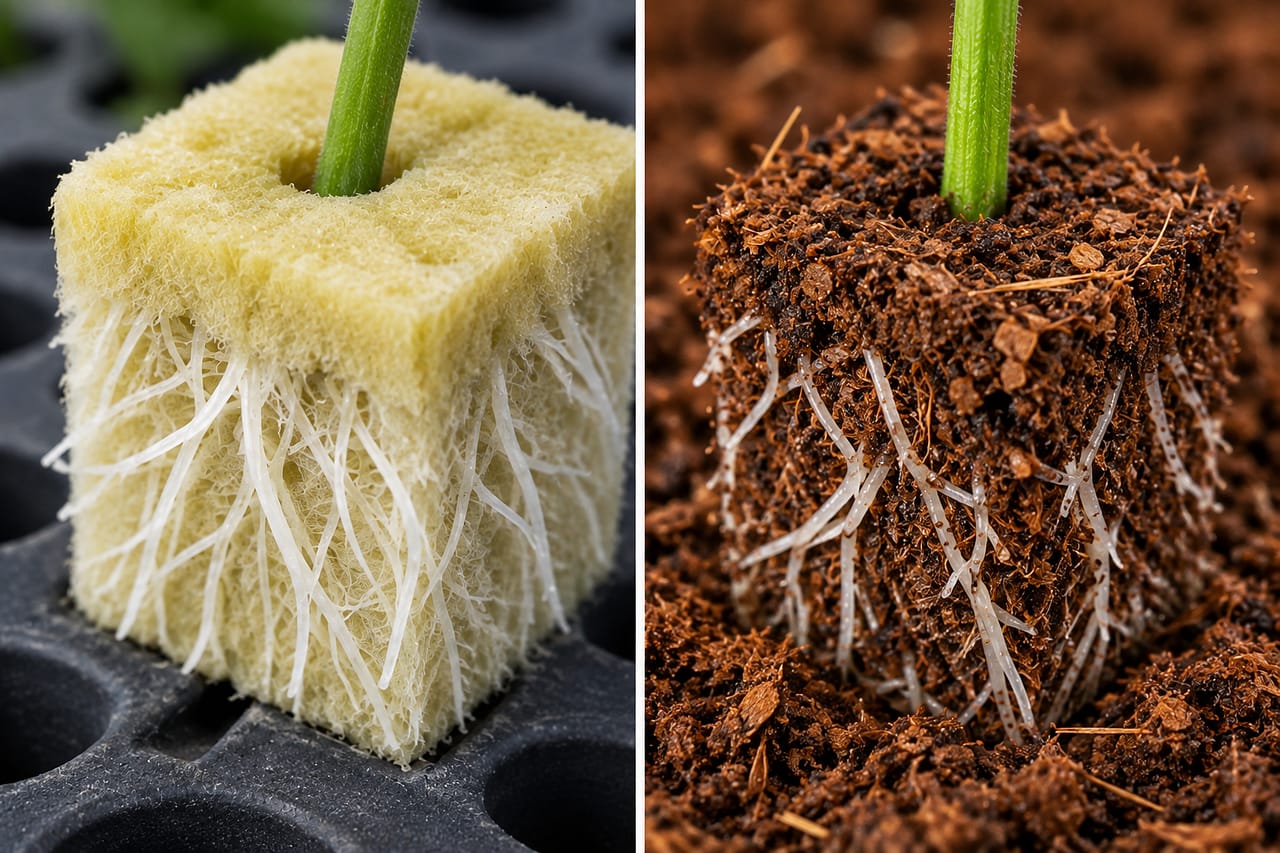
One important chemical distinction is cation exchange capacity: coir can retain and release positively charged nutrients, while rockwool has essentially no cation exchange capacity. That difference matters when reviewing nutrient management; it does not establish that either material is universally superior. UF/IFAS explains the properties of hydroponic media.
Compare the actual products, not just the material names
| Decision | Coco coir quotation | Rockwool quotation |
|---|---|---|
| Product identity | Which pith, fibre or chip blend and finished format is supplied? | Which slab, block or plug model and density is supplied? |
| Start-up | What hydration, washing or buffering instructions apply to this product? | What wet-up and conditioning instructions apply to this product? |
| System fit | Do hydrated dimensions, planting holes and drainage openings fit your gutters? | Do slab dimensions, block positions and drainage requirements fit your gutters? |
| Supply | What batch documents, quantity, availability and delivery terms are confirmed? | What product documents, quantity, availability and delivery terms are confirmed? |
For coir, start with the EC, pH and buffering specification guide. Ask the supplier to identify the test method as well as the reported value. Keep the accepted specification with your purchase records.
Do not transfer irrigation settings unchanged
Your current schedule is a useful baseline to document, not an automatic prescription for a replacement product. Ask your crop adviser to define the trial’s initial irrigation approach and the observations that will trigger adjustments.
Record emitter output, applied volume, drainage, crop stage and the method used to assess substrate moisture. Review these alongside crop observations. A single drain reading or one visually strong plant is not enough to approve a whole-site change.
Run a decision-focused trial
- Define the decision. Write down what you need to improve: installation time, handling, consistency, crop response or supply reliability.
- Keep a documented comparison. Record the existing product, replacement specification, planting material and trial location. Have your adviser select an appropriate layout and replication.
- Track changes. Log irrigation or nutrition adjustments so that substrate effects are not confused with unrelated management changes.
- Measure operational fit. Record usable volume, installation labour, damaged units, delivery performance and crop observations using the same definitions for both options.
- Review before scaling. Decide whether the evidence supports another trial, a limited commercial order or no change.
Use Avee’s commercial trial framework to prepare the brief. It describes an evaluation process; it is not evidence that a particular outcome has already been achieved.
Compare total cost per crop cycle
Build a worksheet that separates product cost, freight, receiving, preparation, installation labour and end-of-cycle handling. Use quoted figures and your own records. Do not insert assumed yield gains or a fixed reuse allowance to make one option appear cheaper.
For end-of-life planning, ask what local collection or disposal routes accept the used material and packaging. Availability of a route is more useful than a broad claim that a substrate is “recyclable” or “sustainable.”
Which should you choose?
Keep the system that meets your documented requirements, or trial a change where there is a clear commercial question to answer. There is no defensible universal winner without specifying the crop, exact substrate, management and comparison criteria.
If you are evaluating coir, compare commercial coco coir grow bags and grow slabs, then send your current specification, trial quantity and destination through the commercial sample-request checklist.
Educational purchasing guidance. Have your crop adviser review irrigation, nutrition and trial design for your operation. Product availability, specifications and delivery terms require written confirmation.