 Skip to main content
- Home
- About
-
Grow mediaCoco peat blocks Bulk loose coir pith Coco husk chipsGrow bagsCoir grow bags Open-top grow bagsPropagationSeed starter pellets Propagation cubes Coir fibre bales View all products →
-
By cropCannabis Tomatoes StrawberriesBy applicationGreenhouse Horse bedding Mushroom substrate All solutions →

 Growing Science · Substrate Guide
Buffered vs Unbuffered Coco Coir: A Commercial Grower's Guide
 June 2026
Buffered coco coir is one of the most important concepts in commercial growing — and one of the most misunderstood. Growers switching from soil or peat moss to coco coir may see calcium- or magnesium-like symptoms after transplant. Buffering status can be one factor, alongside irrigation, feed formulation, source-water chemistry and root-zone conditions.
This guide explains what buffering does, how to buffer coco coir with Cal-Mag using product-label directions, and which checks help a grower decide whether a batch is ready. It also compares in-house preparation with documented pre-buffered coir for commercial facilities in Canada and the USA.
Why Coco Coir Needs Buffering

Coco coir has cation-exchange sites that interact with dissolved nutrients, including calcium and magnesium. Untreated material can alter the balance between the feed solution and root zone; the extent depends on the coir, water chemistry and nutrition programme.
That interaction can contribute to nutrient imbalance, but visible symptoms such as chlorosis, tip damage or slow growth are not specific to buffering. Check irrigation, feed, source water, root-zone measurements and batch information together.
Buffering is intended to occupy exchange sites with calcium and magnesium before planting. It can make early nutrient management more predictable, but it does not replace crop-specific feeding and root-zone monitoring.
Buffered vs Unbuffered: Side by Side
What to monitor
- Calcium- or magnesium-like symptoms may appear after transplant
- Nutrient availability may differ from the feed recipe on paper
- Yellowing or tip damage can have several causes; review buffering alongside feed, irrigation and root-zone conditions
- Early root development may be less predictable when preparation and batch conditions are not verified
- Batch-to-batch consistency depends on the material and the grower's preparation controls
- Nutrient use may be harder to interpret when the starting condition of the coir is unknown
What to monitor
- More predictable calcium and magnesium management
- A more controlled starting point for nutrient management
- Fewer substrate-preparation variables at transplant
- Root development can be assessed under your own crop conditions
- Batch documentation can support more consistent purchasing and preparation decisions when supplied
- Fewer assumptions when the preparation method is documented
How to Buffer Coco Coir Yourself
If you're working with unbuffered coco, prepare it before planting using the coir supplier's instructions and the directions on your chosen calcium-magnesium product. Contact time, concentration and rinsing needs vary, so treat the steps below as a controlled workflow rather than a universal recipe:
Hydrate the coco
Expand the compressed coir with water suitable for your crop and system. Record source-water EC and pH, then break up clumps until the material is evenly hydrated.
Prepare your Cal-Mag solution
Mix the calcium-magnesium solution according to the product label and the coir supplier's preparation guidance. Record the product, dose, solution volume, EC and pH so the process can be repeated and reviewed.
Saturate and soak
Distribute enough solution to wet the coir evenly. Use the contact time specified for the product and material, and keep the batch covered and identified while it rests.
Flush and check EC
Rinse only when the product or batch instructions call for it. Measure EC and pH with a consistent sampling method, then compare the result with the agreed product specification before planting.
Repeat if needed
Do not repeat a soak-and-rinse cycle automatically. Review the measured result, the crop programme and the supplier's instructions; a fixed number of cycles does not prove readiness.

Commercial-scale consideration: In-house buffering can add handling, water use, nutrient inputs, testing and record-keeping. Whether it is practical for a cannabis facility, vegetable greenhouse or vertical farm depends on batch size, labour, water management and the level of process control available.
Pre-Buffered Coco Coir — What Changes Operationally
Pre-buffered coco coir is treated with calcium and magnesium before compression and packaging. Preparation still depends on the ordered grade and your crop programme, so confirm hydration instructions, EC/pH method and batch documentation before transplanting.
For commercial operations running multiple cycles per year, documented pre-buffered material may reduce on-site preparation:
- May reduce on-site preparation when the supplied specification matches your programme
- Documented buffering controls — verify the supplied batch
- Ask for applicable EC and pH results, including the test method
- Can reduce handling and preparation work, depending on the operation
- Helps manage early-cycle nutrient risk alongside an appropriate nutrition programme
- Compare batch documentation and verify performance in your growing system

Avee Cocoseller note: Confirm the ordered product’s washing and buffering status, batch documentation, EC/pH test method and preparation instructions. See our commercial EC, pH and buffering specification guide; do not assume one specification applies to every coir product.
Buffered vs Unbuffered: Full Comparison
| Factor | Pre-Buffered Coco | Unbuffered Coco |
|---|---|---|
| Preparation | Follow the supplied hydration and preparation instructions | Preparation time depends on the chosen method |
| Cal-Mag cost | Depends on the supplied specification and crop programme | Depends on the chosen preparation method |
| Labour | Usually lower when less preparation is needed | Varies with batch size and equipment |
| Consistency | Supplier-controlled; verify the documentation | Controlled by the grower's written procedure |
| Risk of deficiency | Reduced preparation variability when verified | Depends on process control and verification |
| Best for | Operations seeking documented preparation | Operations equipped to prepare and test in-house |
| Price | Confirm current quotation | Compare material plus preparation cost |
When to Review Buffering and Root-Zone Conditions
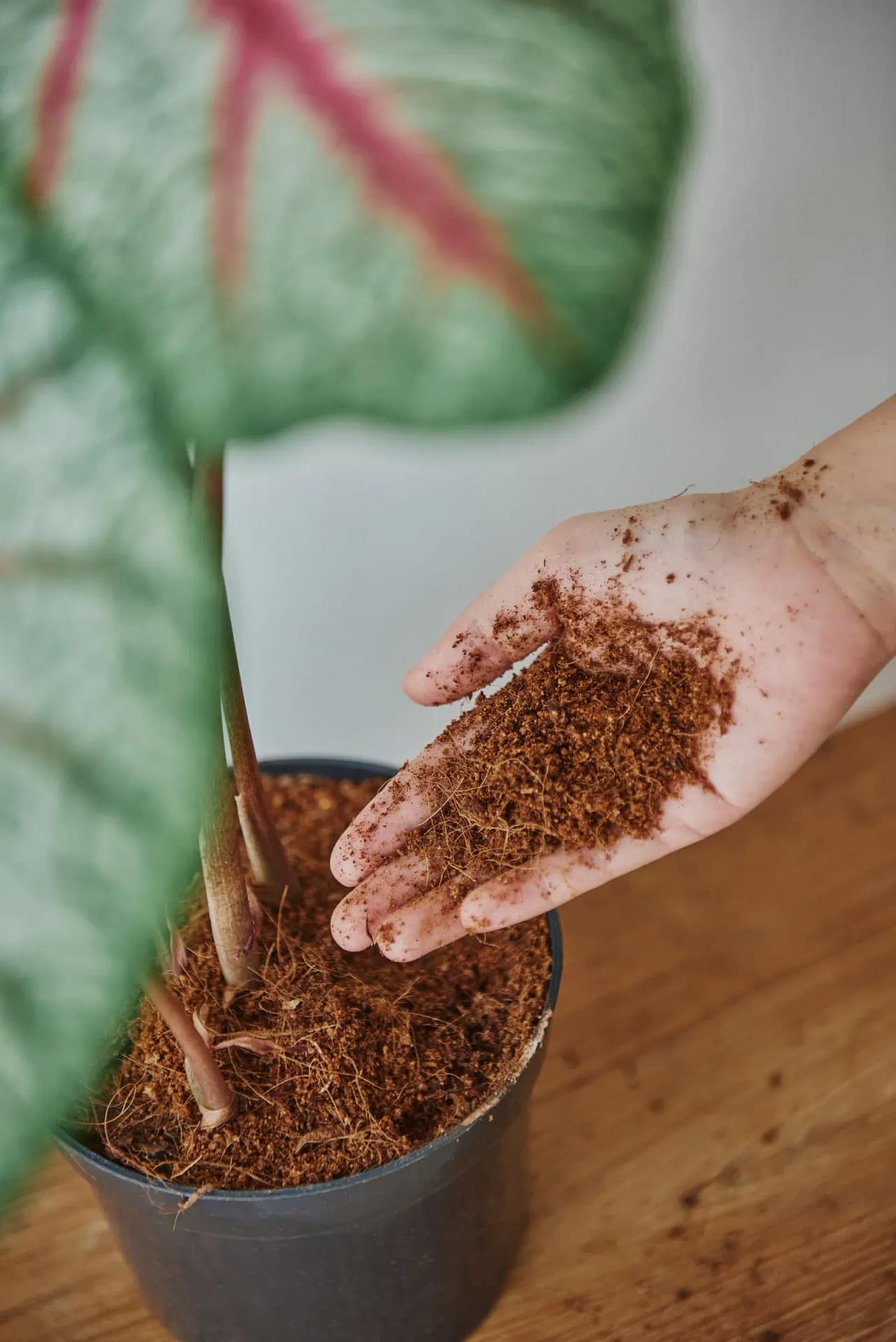
If early crop symptoms appear, avoid assuming the substrate is the only cause. Review irrigation, feed, source water, root-zone EC/pH and the supplied coir documentation together. Useful observations include:
- Interveinal chlorosis on new leaves — may be associated with nutrient availability, root stress or environmental conditions
- Tip damage on new growth — review calcium delivery, salinity, irrigation and environmental demand
- Unexpected drooping — verify irrigation timing, oxygen, root health and substrate moisture distribution
- Higher-than-expected root-zone EC — recheck sampling, source water, irrigation volume and the supplied batch data
- Unexpected pH movement — verify meter calibration, test method, feed, water and substrate together
If symptoms appear, record when and where they occur, verify meter calibration, and compare root-zone results with the crop programme. Escalate persistent batch-level differences to the supplier with sample details and test results before changing the nutrition or substrate plan.
 Bottom Line
Choose the Preparation Route You Can Verify
The right route depends on your crop programme, labour, water management and quality-control process. Pre-buffered coir can reduce on-site preparation, while in-house buffering gives the grower direct control. In both cases, compare the actual batch documentation and verify the material in your own system. Ready to place a bulk order? Our wholesale buying guide covers exactly what to check before committing to a pallet.
Technical Sources
For background on coir particle structure, salt management, electrical conductivity and horticultural processing, see:
Request Current Availability and Batch Details
Tell us the product format, crop, volume and destination. Avee will confirm current availability, preparation status, applicable batch documentation and delivery options.