 Skip to main content
- Home
- About
-
Grow mediaCoco peat blocks Bulk loose coir pith Coco husk chipsGrow bagsCoir grow bags Open-top grow bagsPropagationSeed starter pellets Propagation cubes Coir fibre bales View all products →
-
By cropCannabis Tomatoes StrawberriesBy applicationGreenhouse Horse bedding Mushroom substrate All solutions →
Coco Coir for Mushroom Growing Canada, USA & Mexico
CVG-Ready · No Sterilisation · 80% Air Porosity · 100% Organic
Avee Cocoseller supplies premium bulk coco coir bales to mushroom farms and cultivators across Canada, the USA, and Mexico's expanding cultivation sector — factory-direct wholesale pricing, fast dispatch from Ontario.
The Smarter Substrate for
Serious Mushroom Growers
No Sterilisation Needed — Ever
Coco coir's naturally high lignin and cellulose content acts as a barrier against bacterial and mould contamination. Unlike sawdust or grain-based substrates that require pressure sterilisation at 15 PSI for 2–3 hours, coir only needs pasteurisation at 160–180°F for 1–2 hours. No autoclave, no lab setup — just an oven or a hot water bath. For commercial operations, that means dramatically lower energy costs, faster batch turnaround, and fewer contamination losses per cycle.
Perfect Moisture & Air Balance
Mycelium needs two things in balance: consistent moisture and free air exchange. Coco coir delivers both simultaneously — holding 8–9× its own weight in water while maintaining ~80% air porosity. Most substrates force you to compromise between the two. CVG (coir + vermiculite + gypsum) lets you dial in field capacity precisely, giving mycelium the ideal environment to colonise fast and fruit productively without wet rot or dry spots killing your yield.
Consistent Colonisation and Repeatable Production
The neutral pH of 5.5–6.8 is the sweet spot for nearly all cultivated mushroom species. Coco coir CVG substrates provide consistent moisture distribution and a repeatable structure for commercial production. Colonisation speed depends on species, spawn rate, temperature, moisture and process control.
Scales from Hobby to Commercial — Economically
Small bags of pre-mixed CVG from retail suppliers cost 3–5× what bulk bale coir costs per litre of finished substrate. Our compressed bales expand 5:1, store compactly in a warehouse corner, and give commercial growers factory-direct per-unit economics that small-bag buying never can. Whether you're filling 10 monotubs or 500 commercial fruiting chambers per week, ordering by pallet or container locks in consistent quality and the lowest substrate cost per flush in the market.
How to Make CVG Substrate
with Avee Coco Coir Bales
Hydrate the Bale
Place your compressed coco coir bale in a large tub. Pour boiling or near-boiling water over it — approximately 4–5 litres per kg of dry bale weight. Allow 30–60 minutes to fully expand. Break up clumps and let cool slightly before mixing.
Mix CVG Ratio
Combine expanded coco coir and vermiculite in a 1:1 ratio by volume. Add approximately 1 tablespoon of agricultural gypsum per quart of dry vermiculite. Mix thoroughly until the coir and vermiculite are evenly distributed throughout.
Check Field Capacity
Squeeze a firm handful of the mix. It should release only 1–2 drops of water. If it drips freely, add more dry vermiculite. If no drops at all, add a small amount of water and mix again. Getting this right is the most important step for contamination-free colonisation.
Pasteurise at 160–180°F
Load the substrate into an oven-safe tray, cover with foil, and pasteurise at 160–180°F (71–82°C) for 1–2 hours. No pressure cooker needed. Do not exceed 180°F — this can damage substrate structure. Alternatively, use a steam pasteuriser or hot water bath method.
Cool, Inoculate & Incubate
Cool completely to below 80°F (27°C) before adding spawn. Mix with mushroom spawn at your target ratio, pack into monotubs or fruiting containers, and incubate at species-appropriate temperature until fully colonised — typically 10–21 days.
Bale Yield Reference Guide
Approximate output per Avee compressed bale (dry weight basis)
| Operation Size | Bales Needed | CVG Output |
|---|---|---|
| 5 monotubs (66qt) | ½ bale | ~40 L |
| 10 monotubs | 1 bale | ~80 L |
| 25 monotubs | 2–3 bales | ~200 L |
| 50 monotubs | 5 bales | ~400 L |
| 10-chamber fruiting room | 3–4 bales | ~280 L |
| 50-chamber commercial | 1 pallet | ~1,400 L |
| Large-scale / weekly | Container order | Contact us |
Yields are approximate and vary by CVG ratio and layer depth. Contact us for a custom estimate.
Coco Coir vs Straw vs Sawdust
vs Peat Moss — Which Wins?
← Swipe for full table| Feature | Coco Coir (CVG) 🇨🇦🇺🇸🇲🇽 | Straw | Hardwood Sawdust | Peat Moss |
|---|---|---|---|---|
| Sterilisation Required | ✓ Pasteurise only | ~ Pasteurise only | ✗ Full sterilise (15 PSI) | ~ Pasteurise only |
| Contamination Risk | ✓ Very low | ✗ High (wet bales) | ~ Medium (if sterilised) | ~ Low–medium |
| Air Porosity | ✓ ~80% | ~ 60–70% | ~ 50–65% | ✗ 40–55% |
| Water Retention | ✓ 8–9× own weight | ~ 3–4× own weight | ~ 2–3× own weight | ✓ 10–20× own weight |
| pH Suitability | ✓ 5.5–6.8 (neutral) | ✓ 6.0–7.0 | ~ 4.5–5.5 (acidic) | ✗ 3.5–5.0 (too acidic) |
| Colonisation Speed | ✓ Fast | ~ Medium | ~ Medium–fast | ✗ Slow |
| Consistency (batch-to-batch) | ✓ Very high | ✗ Variable | ✓ High (if sterilised) | ~ Medium |
| Bulk Wholesale Availability | ✓ Bale / pallet / container | ✓ Bale | ~ Pellets / bags | ~ Bale / bag |
| Organic / Additive-Free | ✓ 100% natural | ✓ Usually | ~ Varies by source | ~ Some additives common |
| Best For | CVG, casing layer, all species | Oyster mushrooms | Shiitake, lion's mane | Casing layer only |
Works With Every Major Cultivated Species
Our coco coir's neutral pH and clean organic profile makes it the universal substrate base across all major gourmet and medicinal mushroom varieties grown in Canada, the USA, and Mexico.
Bulk Coco Coir Built for
Mushroom Cultivators

Compressed Coco Coir Bale
Confirm the product specification, applicable batch test results and preparation requirements before ordering. Testing scope and any certification needed for your operation must be confirmed; do not assume sterile or pathogen-free status.
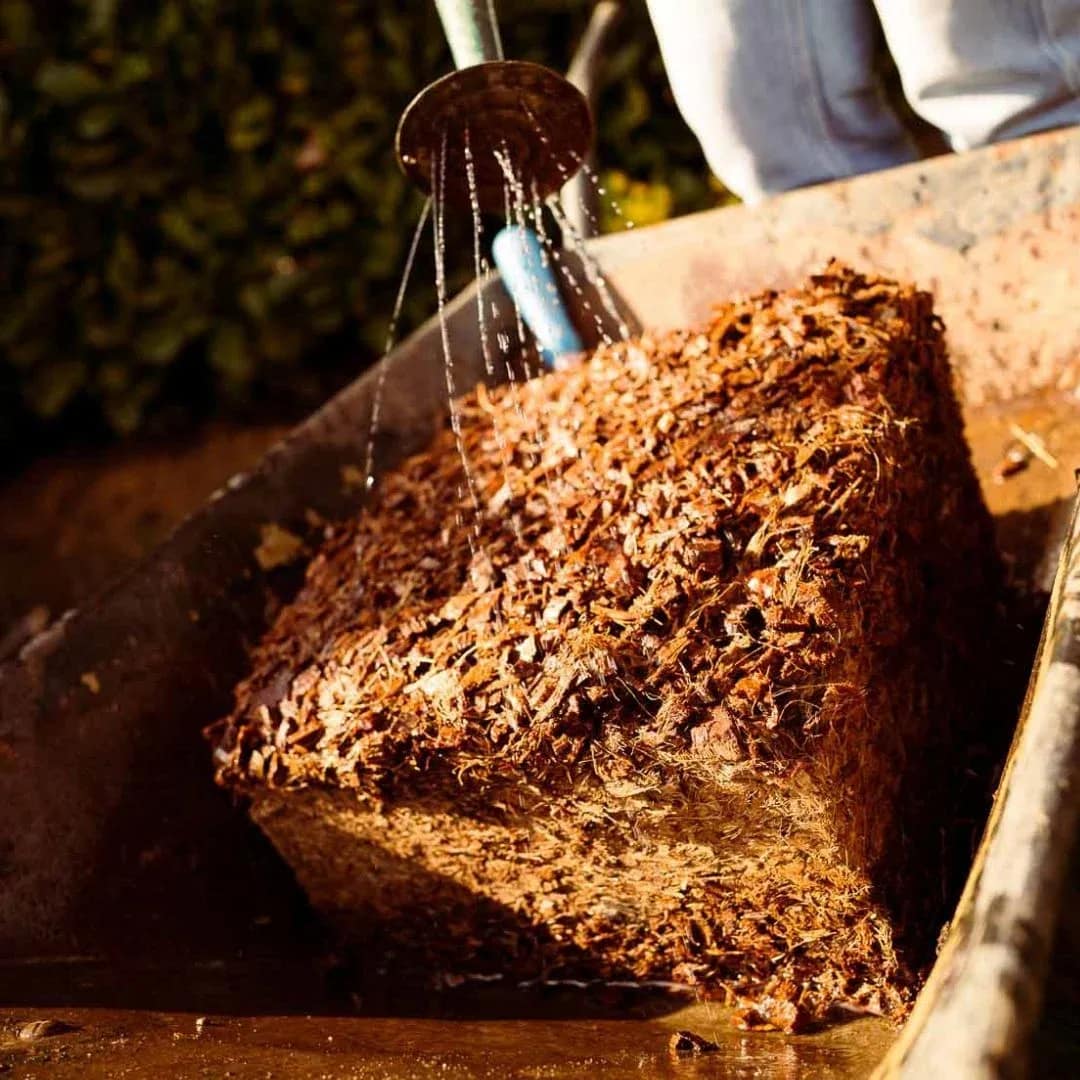
Fine Coir Pith — Casing Grade
Pre-expanded, ultra-fine coir pith specifically suited for use as a mushroom casing layer. Applied over fully colonised substrate to trigger pinning, maintain surface humidity, and protect against contamination at the critical fruiting stage. No hydration wait time.
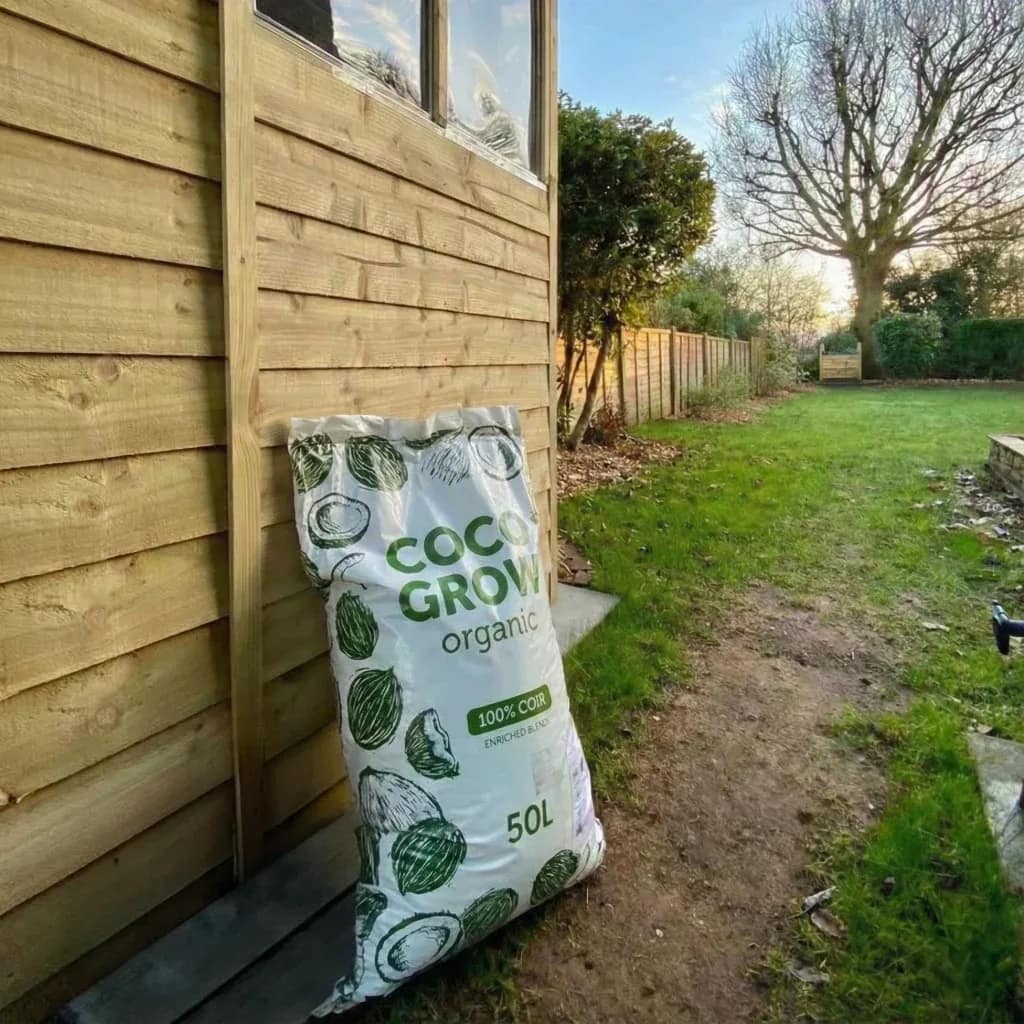
Pre-Expanded Loose Coir — 50L Bags
Built for large-scale commercial mushroom farms that need ready-to-mix substrate at volume and speed. Each 50L bag fills multiple fruiting chambers immediately — no hydration wait, no expansion time. Batch-consistent quality from a factory-direct supply chain with zero interruption risk.
From Bale to Flush
in Three Steps
Hydrate & Mix CVG
Expand the bale with boiling water. Combine 1:1 with vermiculite by volume, add gypsum, and mix to field capacity — substrate releases only 1–2 drops when squeezed. No special equipment needed. One bale produces enough CVG for 8–12 standard monotubs.
Pasteurise — No Autoclave
Pasteurise at 160–180°F (71–82°C) for 1–2 hours using an oven, steam tent, or hot water bath. No pressure cooker required. Coir's natural resistance to contamination makes this simple pasteurisation step fully sufficient — saving hours of sterilisation time per batch.
Inoculate & Fruit
Cool completely, mix with mushroom spawn at your target ratio, and pack into monotubs, bags, or fruiting chambers. Incubate at species-appropriate temperature until fully colonised, then fruit. Expect your first flush in 10–21 days depending on species and conditions.
Ontario Stocked.
Canada, USA & Mexico Delivered.
Our Canadian warehouse sits at the centre of the Canada–USA supply corridor — giving mushroom farms in Ontario, Quebec, Michigan, New York, Ohio, and Pennsylvania faster delivery than any BC or West Coast supplier can offer. Mexico shipping lanes are expanding as our cultivation customer base grows.
We offer pallet and container-load pricing for commercial mushroom operations. Volume ordering dramatically reduces your per-bale cost and removes the inconsistency risk of buying from multiple retail sources. We typically respond within one business day, Monday to Friday.
Wholesale accounts receive priority dispatch, repeat-order scheduling, and a direct line to our supply team — so your production cycles never stall waiting on substrate.
Common Questions from
Mushroom Growers
Have a specific substrate or volume question?
Our supply team works directly with commercial mushroom farms across Canada and the USA. We'll help you size your order and get wholesale pricing fast.
Ready to Source Bulk Coco Coir
for Your Mushroom Operation?
Factory-direct wholesale pricing. Fast dispatch from Ontario. Consistent quality, batch after batch. Ships across Canada and the USA, with Mexico lanes expanding. Expect a response typically within one business day, Monday to Friday.