 Skip to main content
70/30 coco–perlite vs coco–husk chips
Same ratio. Different ingredients. Know what to check before you compare blends or approve a commercial order.

A bag labelled “70/30 coco” does not tell you everything you need to order a commercial substrate. The remaining 30% may be perlite or coconut husk chips, and those are different ingredients.
Avee’s 70/30 blend page describes 70% coco pith and 30% coco husk chips—not a coco–perlite mix. Before comparing quotations, confirm the ingredients and whether the percentages refer to volume, mass or another stated production basis.
Two labels, two different recipes
| Detail | Coco–perlite | Coco pith–husk chips |
|---|---|---|
| Main component | Coco material; ask which grade and fraction. | Coco pith; ask which grade. |
| Second component | Expanded perlite. | Coconut husk chips. |
| Missing information | Ratio basis, perlite grade, coir treatment and final format. | Ratio basis, chip grading, coir treatment and final format. |
| What the ratio does not prove | Measured air space, water retention or suitability for your crop. | Measured air space, water retention or suitability for your crop. |
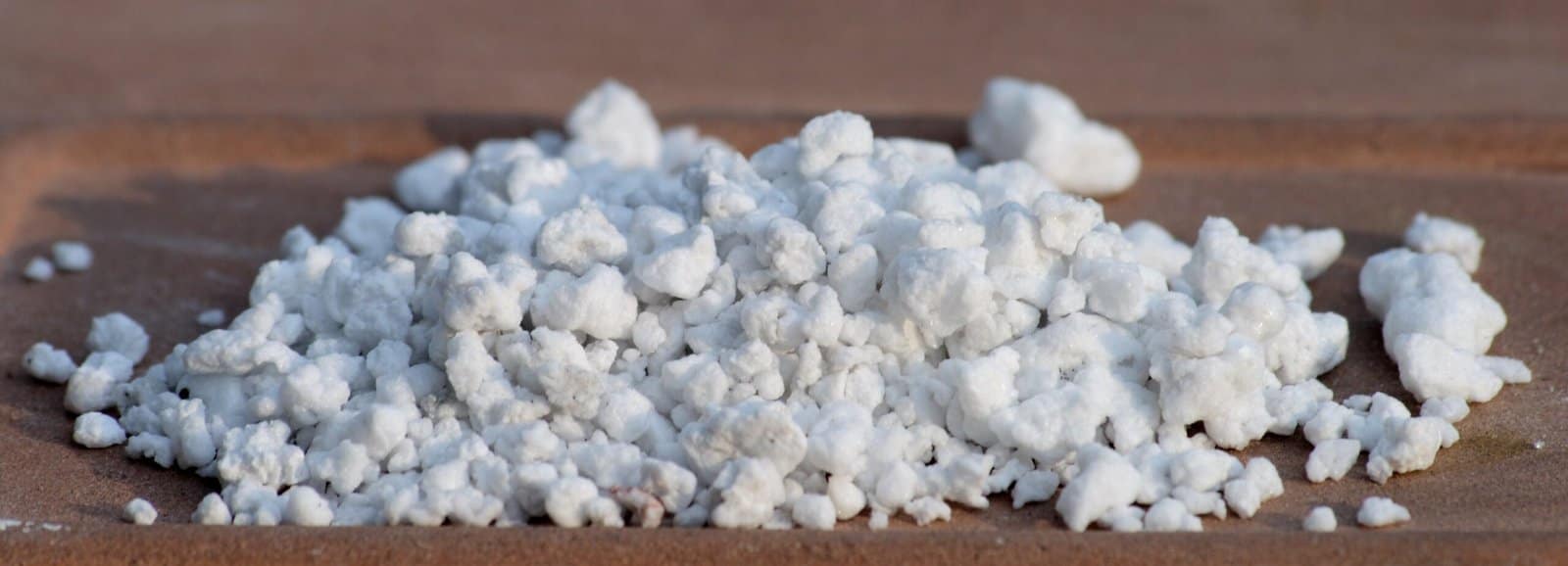
Perlite is an expanded volcanic mineral; coir is derived from coconut husks. Texture affects the balance between drainage and retained water, so ingredient names alone are not a complete performance specification. UF/IFAS describes these hydroponic substrate components.
Do not treat the percentages as a performance result
For container blueberry production, UF/IFAS describes the balance of fibrous and coarse substrate components as a factor in water retention, drainage and air-filled porosity. That is a reason to evaluate a finished blend—not to copy one crop’s targets into every other production system. See its container blueberry production guide.
Ask for the finished product’s specification and the conditions under which any physical properties were measured. A loose-media result should not automatically be treated as proof of how a compressed slab will behave after hydration in your gutter.
What should be written on the quotation?
- Full ingredient names: specify coco pith, fibre, husk chips or perlite rather than “coco mix” alone.
- Ratio basis: state what 70/30 means and when the ingredients are measured.
- Grading: request the relevant particle-size information and agreed tolerances.
- Format: identify block, loose bag, slab or pre-filled grow bag, with dimensions and usable hydrated volume.
- Treatment and testing: confirm washing, buffering, applicable EC/pH methods and requested batch documents.
- Commercial details: identify units per pallet, order quantity, destination and the confirmed delivery terms.
Keep this information together so purchasing staff and the growing team are approving the same product. Review Avee’s quality and batch documentation guide before accepting a specification.
A practical comparison before placing a larger order
Start with your existing crop programme and write down the problem you want the blend to address. Then request representative material in the format intended for commercial supply. Do not compare a loose sample of one blend with an unrelated compressed product and treat the result as a direct substitute test.
With your adviser, agree what will be recorded: hydration and usable volume, handling, drainage behaviour, moisture observations, crop response and labour. Record the irrigation settings and every change made during the trial. Keep sample and batch references with the notes.
At review, separate observed results from assumptions. If two products both meet the crop requirements, compare their delivered and operational costs using actual quotations. If neither has sufficient evidence, request more information rather than choosing from the ratio alone.
Common buying questions
Does 70/30 always mean 70% coco and 30% perlite?
No. Read the named ingredients. Avee’s published 70/30 product direction is pith and husk chips. Do not assume that a supplier stocks both combinations.
Can I switch between the two without changing irrigation?
Do not assume they are interchangeable. Keep your existing programme as a documented comparison and have your adviser determine how to evaluate the replacement.
Does adding chips or perlite guarantee a particular air-porosity figure?
No. Request a measurement for the relevant finished product, with the method and conditions. The percentage on the label is not itself that measurement.
Specify the blend you actually need
Review the 70/30 pith-and-chip option and the air-porosity and water-holding guide. Then request a specification review with your crop, format, dimensions, irrigation approach, quantity and destination.
Educational buying guidance, not a universal blend recommendation. Confirm the product specification and trial suitability before commercial use.