 Skip to main content
How to water coco coir
A practical guide to irrigation timing, field capacity, dryback and runoff EC for containers, grow bags and commercial greenhouse systems.
Coco coir holds plenty of water, but successful coir growing is not about keeping the root zone constantly soaked. It is about replacing the water the crop uses, maintaining oxygen around the roots, and preventing fertilizer salts from concentrating in the substrate.
This guide explains how to water coco coir in containers, grow bags and commercial greenhouse systems. It is written for growers in Canada and the United States, where the correct schedule can change dramatically between a low-light Ontario winter and a high-radiation California summer.
Why coco coir needs a different watering strategy
Coco coir is a soilless substrate with useful water-holding capacity and air-filled pore space. Unlike field soil, it contains little plant nutrition of its own, so most greenhouse and hydroponic systems deliver water and fertilizer together through fertigation.
The mix matters. Fine coir pith retains more water, while coarse coco husk chips increase drainage and air space. Container height, compaction, root density, temperature, humidity, light and airflow all change the rate at which a bag dries. That is why “water once per day” is not a reliable rule.
Start with field capacity, not container size
Field capacity is the amount of water a substrate retains after it has been fully saturated and allowed to drain freely. It is a better basis for irrigation decisions than the advertised volume of a container or grow bag.
- Place the bag or container where it will be used and confirm that drainage holes are open.
- Apply water or a suitable starter nutrient solution slowly and evenly.
- Allow the substrate to expand completely and drain.
- Measure the total input and drainage, or weigh a representative bag after drainage.
- Use this fully hydrated state as the baseline for future dryback measurements.
A 10-litre bag does not necessarily hold 10 litres of available water. Particle size, compression and bag geometry determine its actual field capacity. For commercial installations, test several bags from the production batch rather than relying on one sample.
What dryback means in coco coir
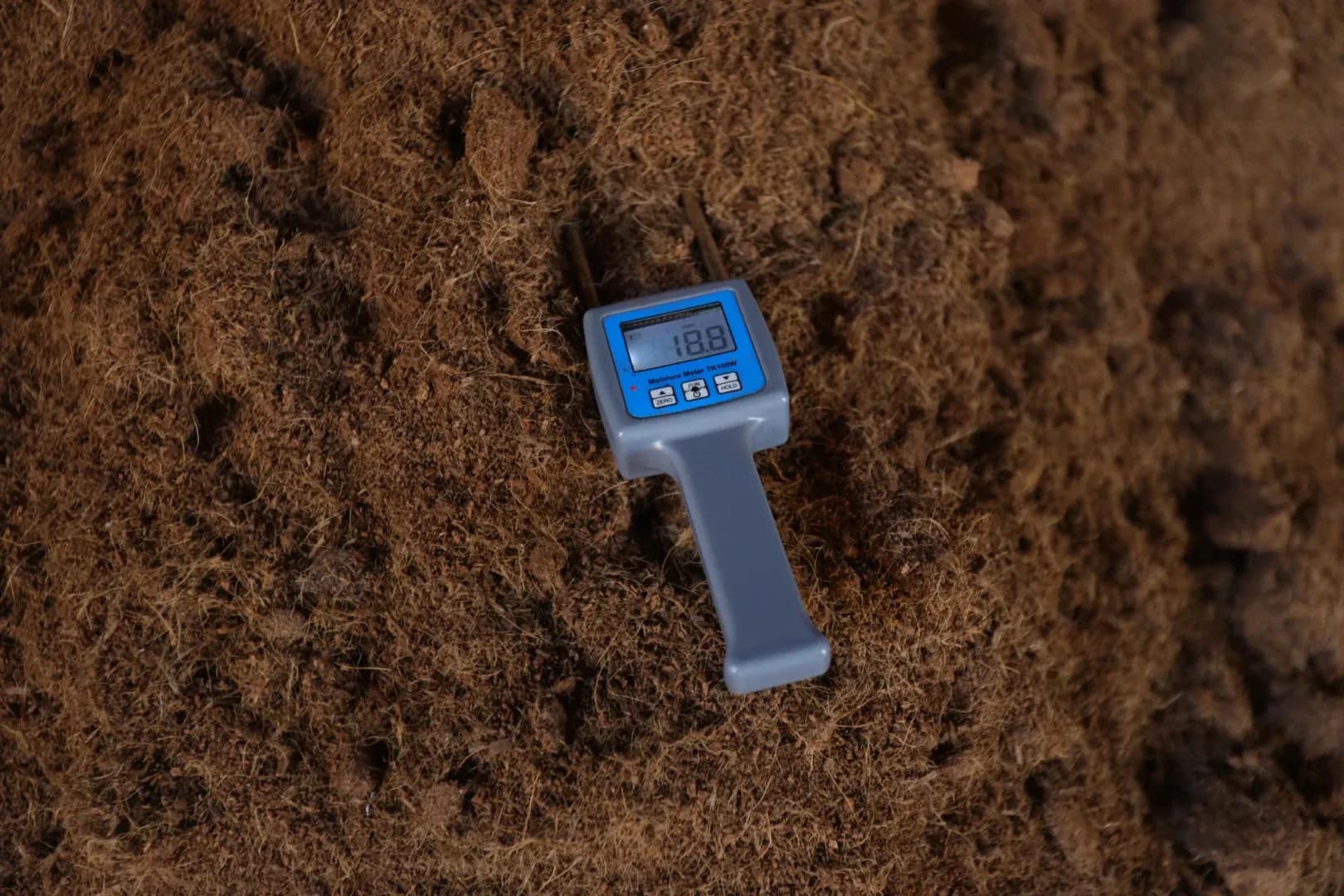
Dryback is the reduction in substrate water content between the fully irrigated state and the next irrigation. It can be measured by bag weight or with a volumetric water-content sensor.
A smaller dryback generally keeps water and nutrient availability more stable and supports vegetative growth. A larger, controlled dryback can encourage a more generative response in fruiting crops. Excessive dryback, however, concentrates salts, makes rewetting less uniform and can restrict calcium movement.
| Root-zone signal | Typical irrigation approach | Main risk |
|---|---|---|
| Vegetative / establishment | Smaller, more frequent shots; stable moisture | Starting too early and leaving a young root zone saturated |
| Balanced production | Replace daily use while maintaining controlled overnight dryback | Using the same schedule as radiation and crop load change |
| Generative steering | Later start or shorter window with carefully controlled depletion | Pushing dryback too far and driving root-zone EC upward |
There is no single dryback percentage that is correct for every crop and bag. Use crop response, field capacity, drain EC, climate and sensor data together. Fixed percentages copied from a different substrate or container can produce misleading results.
A practical coco coir irrigation schedule
1. Rooting and early establishment
Begin with fully and uniformly hydrated coir. Keep the immediate transplant zone moist, but do not repeatedly saturate the entire bag before roots have explored it. Start with fewer irrigation events and increase them as root mass, leaf area and transpiration grow.
2. Active vegetative growth
As plants begin using water quickly, divide the daily volume into smaller shots. Frequent fertigation supplies fresh nutrients and helps avoid large swings between wet and dry conditions. Check emitter uniformity: an irrigation strategy cannot compensate for blocked or inconsistent drippers.
3. Flowering and fruit load
Crop demand usually rises with canopy size, radiation and fruit load. Increase frequency before automatically increasing every shot. Monitor the first and final drain samples of the day. Rising runoff EC can indicate that the crop is removing water faster than salts are being managed.
4. End of the irrigation day
Stop early enough to achieve the desired overnight dryback without leaving the roots severely depleted. Late irrigation may be justified during extreme heat or under long supplemental-light periods, but routine irrigation into a cool, inactive root zone can suppress oxygen and keep the greenhouse unnecessarily humid.
How much runoff should coco coir produce?
Runoff—or leachate—is useful because it shows whether enough solution is moving through the root zone to control salt accumulation. Many run-to-waste systems use drainage as one indicator, but the correct percentage depends on water quality, fertilizer EC, crop, climate and whether drainage is captured and recirculated.
Do not chase a runoff percentage in isolation. Record these four numbers together:
- Total irrigation volume delivered
- Total drainage volume collected
- Input-solution EC and pH
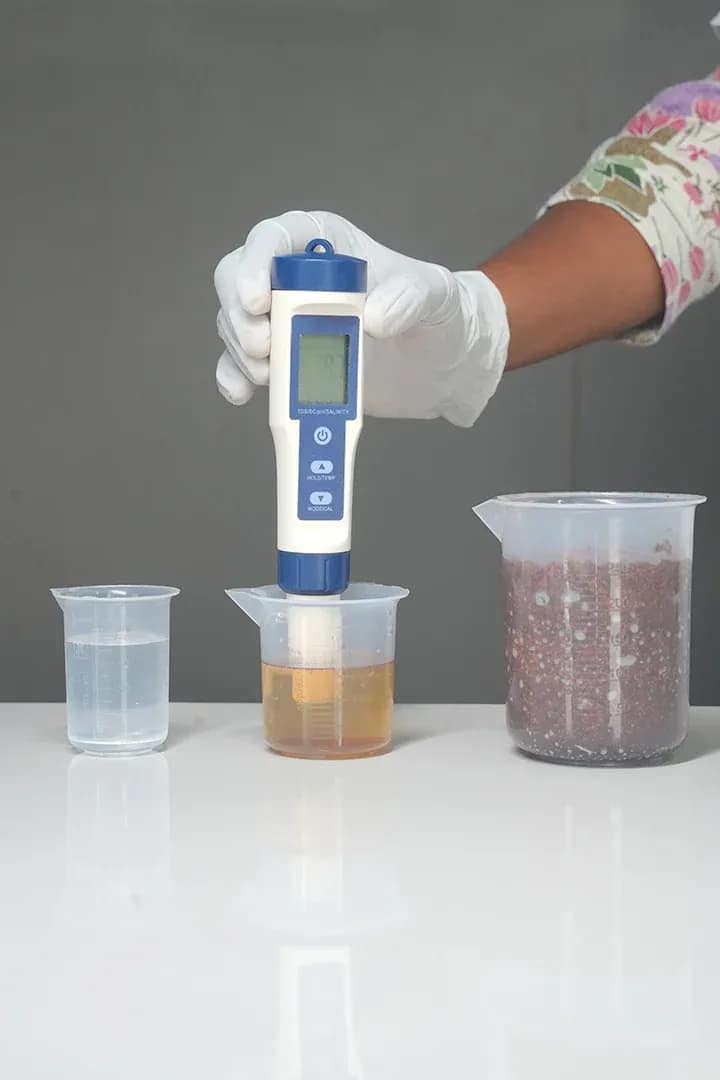
- Drainage EC and pH, sampled consistently
University of Florida guidance for solid-media greenhouse systems describes leachate around 10–20% of applied volume as a general reference and recommends comparing leachate EC with the applied solution. Crop-specific programs may require a different target, especially when source-water salinity is high. Always follow the nutrient program and local discharge requirements applicable to your operation.
How to interpret runoff EC
Electrical conductivity measures the total concentration of dissolved ions; it does not identify which ions are present. Runoff EC should therefore be treated as a trend, not a complete diagnosis.
| Observation | Possible meaning | Check next |
|---|---|---|
| Drain EC steadily rising above input | Water uptake is concentrating salts or daily leaching is inadequate | Emitter output, irrigation frequency, source water, drain volume and crop demand |
| Drain EC close to input and stable | Root-zone salt balance may be stable | Continue trending with plant and tissue observations |
| Drain EC unexpectedly below input | Dilution, sampling timing, channeling or strong nutrient uptake may be involved | Meter calibration and a standardized sample from representative bags |
| Different bags show very different EC | Non-uniform irrigation, drainage or substrate hydration | Pressure, drippers, bag slope, drain cuts and compaction |
High soluble salts can injure roots, restrict growth and cause marginal leaf burn or wilting. If EC is outside the crop target, diagnose the cause before applying a large plain-water flush; an abrupt change can create another root-zone imbalance.
Canada versus USA: adjust for climate, not the border
A coco coir irrigation schedule in Canada and one in the USA should use the same measurement principles, but not necessarily the same clock times or shot counts.
| Situation | Likely adjustment |
|---|---|
| Ontario or BC winter: low solar radiation, short days | Later first shot, fewer events and careful overnight moisture management |
| Canadian greenhouse with supplemental lighting | Schedule from actual light and transpiration, not outdoor sunrise alone |
| California, Arizona, Texas or Florida heat | Earlier response to radiation and higher daytime frequency; watch source-water EC |
| Cool US Midwest or Northeast shoulder season | Reduce frequency as radiation falls; avoid carrying a summer schedule into autumn |
The University of Arkansas notes that irrigation frequency changes with substrate, temperature, relative humidity and plant growth. In other words, the best controller is one that responds to plant demand, radiation or measured substrate water content—not just a repeating timer.
Common coco coir watering mistakes
- Using a soil schedule. Coir is normally managed with more frequent, smaller fertigation events than dense soil.
- Starting high frequency too early. A small transplant cannot remove water from an entire commercial bag.
- Letting coir become severely dry. Salts concentrate as water is removed, making the next irrigation harder to manage.
- Ignoring source-water EC and alkalinity. Irrigation water changes both nutrient formulation and the meaning of runoff readings.
- Comparing inconsistent samples. Always sample at the same stage of the irrigation cycle and from representative bags.
- Assuming every coir blend drains alike. Pith-to-chip ratio, compression and container height change field capacity.
- Managing only to runoff. Drainage, crop response, substrate water content, radiation and EC trends belong in the same decision.
Daily irrigation checklist
- Confirm tank EC, pH and temperature before the first irrigation.
- Inspect pressure and emitter output at the beginning and end of representative lines.
- Record the time of first drain.
- Measure daily input and drainage volumes.
- Measure drain EC and pH using the same sampling method.
- Check bag weight or substrate water-content data before and after the irrigation window.
- Inspect roots, leaf posture and crop load.
- Adjust the next day from trends—not from one isolated reading.
Choose the substrate around your irrigation system
If you are considering a different growing medium, use our coco coir versus rockwool comparison to plan a documented trial rather than transferring irrigation settings unchanged.
The irrigation system and substrate specification should be designed together. A high-frequency tomato program may need a different pith-to-chip ratio than a strawberry trough or a nursery container. Avee supplies coco coir grow bags, open-top grow bags, 5 kg coco coir blocks and custom blends for commercial growers across Canada and the USA.
When requesting a substrate recommendation, provide the crop, bag dimensions, plants per bag, dripper flow rate, irrigation-water analysis, greenhouse location and expected planting window. Those details are more useful than simply asking for “high drainage” or “high water retention.”
Need a crop-specific grow bag specification?
Tell Avee your crop, location, row spacing and irrigation setup. We will recommend a pith-to-chip blend, bag size and product format for your operation.
Frequently asked questions
How often should I water coco coir?
Water according to crop demand, root development, field capacity and climate. Young plants may require relatively few events, while a mature crop under high light may need multiple small irrigations. Increase frequency gradually and verify the result through drainage and water-content measurements.
Should coco coir dry out between waterings?
Allow a controlled dryback, but do not routinely let the entire root zone become severely dry. Excessive dryback concentrates fertilizer salts and can make water distribution uneven.
Do I feed nutrients every time I water coco?
Commercial hydroponic coir is commonly fertigated with a complete nutrient solution, but the formula and EC must match the crop, water analysis and growth stage. Follow a qualified crop nutrition program rather than applying a universal recipe.
What should runoff EC be in coco coir?
There is no universal runoff EC for every crop. Compare it with the input solution and the crop-specific root-zone range, using the same sampling method each day. A persistent upward trend deserves investigation.
Is coco coir irrigation different in winter?
Usually. Lower radiation and transpiration generally mean fewer irrigation events and a later start. Greenhouses using supplemental lighting should schedule from actual light and plant demand rather than the calendar alone.
Technical references
- Ontario Ministry of Agriculture, Food and Agribusiness: Publication 836C—Growing Greenhouse Tomatoes
- University of Florida IFAS Extension: Irrigation of Greenhouse Vegetables
- University of Arkansas: Greenhouse Crops Irrigation
- UMass Extension: Soluble Salts and Electrical Conductivity for Greenhouse Crops
- University of Florida IFAS Extension: Common Media Used in Hydroponics
This article provides general starting principles. Commercial irrigation and nutrient targets should be validated for your crop, cultivar, water analysis, substrate specification, climate and production system.