Avee Cocoseller

Commercial nurseries · Propagation · Peat-free programmes

Coco coir substrates for commercial nurseries and propagation

Every nursery handles propagation differently. The right coir format depends on your tray, crop stage, irrigation method and transplant workflow. Avee manufactures propagation cubes, starter pellets, loose pith and compressed blocks in Tamil Nadu, with Canadian and US commercial orders coordinated through Ontario.

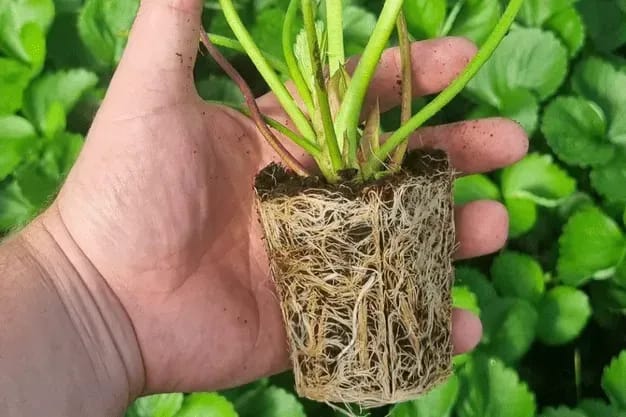
Seedling in a coco coir propagation plug showing dense white root development
Coco coir propagation plug with visible root development.
Match format to production stage

The right format changes as the crop moves through your nursery

A cube that works well for rooting may not suit a liner or finished container. Start with the crop stage, cell geometry, irrigation method, handling equipment and transplant workflow—then choose the coir format around that system.

01 · ROOTING & GERMINATION

Propagation cubes

For cuttings and seedlings, preformed cubes can simplify tray loading and transplanting while keeping dimensions consistent from unit to unit.

  • Confirm cube dimensions and tray fit
  • Confirm hole or dibble requirements
  • Evaluate moisture uniformity before scale-up

View propagation cubes →

02 · SEED STARTING

Compressed coco pellets

These compact peat-free units save storage space, expand after hydration and can move with the young plant into the next production stage.

  • Useful where storage efficiency matters
  • Confirm expanded size and sleeve/netting
  • Trial hydration procedure with your water

View coco pellets →

03 · NURSERY BLENDING

Loose pith and blocks

For nurseries that run their own mixing and filling line, loose pith or compressed blocks provide more control over the final blend.

  • Choose loose or compressed logistics
  • Define particle-size and fibre limits
  • Validate expansion and blending yield

View loose coco coir →

Commercial selection guide

Choose by workflow, not by product name

Production needLikely formatWhy it may fitConfirm before ordering
Cuttings or clonal propagationPropagation cubeRepeatable geometry and direct tray handlingDimensions, hole pattern, moisture profile, packing count
Seed germinationStarter pellet or small cubeCompact storage and reduced media handlingExpanded volume, hydration time, tray fit, nutrient plan
Plug and liner productionFine or blended loose coirCan be integrated into a nursery’s own fill lineParticle distribution, fibre content, density, machine behaviour
Finished nursery containersPith/chip blendWater-holding and air space can be balanced for container geometryCrop duration, container height, irrigation frequency, target physical properties
Potting-mix manufacturing5kg blocks, bales or loose coirEfficient bulk ingredient for peat-reduced or peat-free blendsExpansion test method, moisture, salinity, blending ratio and annual volume
Technical qualification

What a nursery buyer should specify

A useful quotation needs more than total volume. Tell us how the material will be used so the format and specification can be checked against your system. Before approving a trial, you can also review our quality and batch documentation process.

Crop & stageSeed, cutting, plug, liner or finished plant
Cell or potDimensions, volume and container geometry
IrrigationOverhead, boom, ebb-and-flow, drip or hand watering
Crop cycleExpected production duration and reuse policy
Physical targetWater-holding, air space, bulk density or blend direction
Chemical targetRequired EC/pH method and buffering expectation
PackagingUnits per case, pallet configuration and labelling
Delivery planAnnual volume, call-off schedule, destination and required date

Quality questions to ask any supplier

  • Which laboratory method is used for EC and pH?
  • Is the value a target, a typical result or a contractual limit?
  • How are particle size and long fibre controlled?
  • What buffering treatment is used, if any?
  • Which batch documents can accompany the quoted material?
  • How should representative samples be taken and retained?

Run a production-scale trial

Before changing media across a high-value crop, qualify the exact quoted format under your water quality, fertilizer programme, trays, irrigation and greenhouse conditions.

  • Document hydration procedure and starting volume
  • Measure uniformity across multiple units
  • Monitor root development and irrigation response
  • Compare handling, transplanting and crop losses
  • Keep the batch reference with trial records
Supply planning

Plan supply around your nursery schedule—not assumptions

Stock items and made-to-order formats do not always follow the same timeline. Your quotation should confirm current availability, minimum quantities, production timing, pallet configuration and freight terms before you plan a crop changeover.

STEP 1

Send the specification

Provide crop, format, dimensions, annual volume, destination and required date.

STEP 2

Review product and documents

Confirm the applicable technical targets, sample plan and documents for the quoted batch or production run.

STEP 3

Approve trial and supply plan

Validate the material, then agree on pallet or container quantities and delivery scheduling.

Frequently asked questions

Nursery and propagation questions

Is coco coir a complete growing medium for seedlings?

Coco coir supplies physical support and water/air management, but it is not a complete fertilizer. Nutrient and irrigation programmes must be designed for the crop, water source, growth stage and coir specification.

Should propagation coir be buffered?

The required treatment depends on the product, crop and fertilizer strategy. Ask for the precise treatment and test method used for the material being quoted; do not rely on “buffered” as a stand-alone quality description.

Can Avee manufacture custom cube or pellet sizes?

Custom requirements can be reviewed commercially. Send the finished dimensions, tray drawings or samples, expected quantity and required date so feasibility and production terms can be confirmed.

Can coco coir be blended with bark, perlite or other components?

Yes. Nurseries often use coir as one component of a larger mix. The final blend should be tested because container geometry, particle distribution and the other ingredients all affect physical performance.

What documentation is available?

Ask Avee to identify the documentation applicable to the specific material and batch being quoted. Required tests, methods and acceptance limits should be agreed before a commercial commitment.

Send us your nursery specification

Include crop stage, tray or container dimensions, current medium, irrigation method, annual quantity, destination and required delivery date. We’ll review the closest standard format or a custom-production route.

Request a nursery substrate review →