 Skip to main content
- Home
- About
-
Grow mediaCoco peat blocks Bulk loose coir pith Coco husk chipsGrow bagsCoir grow bags Open-top grow bagsPropagationSeed starter pellets Propagation cubes Coir fibre bales View all products →
-
By cropCannabis Tomatoes StrawberriesBy applicationGreenhouse Horse bedding Mushroom substrate All solutions →
What Is Coco Coir? The Complete Guide for Growers
Everything commercial and home growers need to know about coco coir: how it's made, how it compares to peat moss and soil, and how to choose the right type for cannabis, greenhouse, hydroponic, or nursery production.
Coco coir (also called coco peat or coconut coir) is a soilless growing medium made from the fibrous husk of coconuts. Over the last decade it's become one of the most widely used substrates in commercial horticulture — replacing peat moss in everything from cannabis cultivation to greenhouse vegetables to nursery propagation. This guide covers what coco coir actually is, how to evaluate it, and where to go deeper on specific topics like buffering, sizing, and product types. For a closer look at processing steps, read how coco coir is made.
What Coco Coir Is and How It's Made

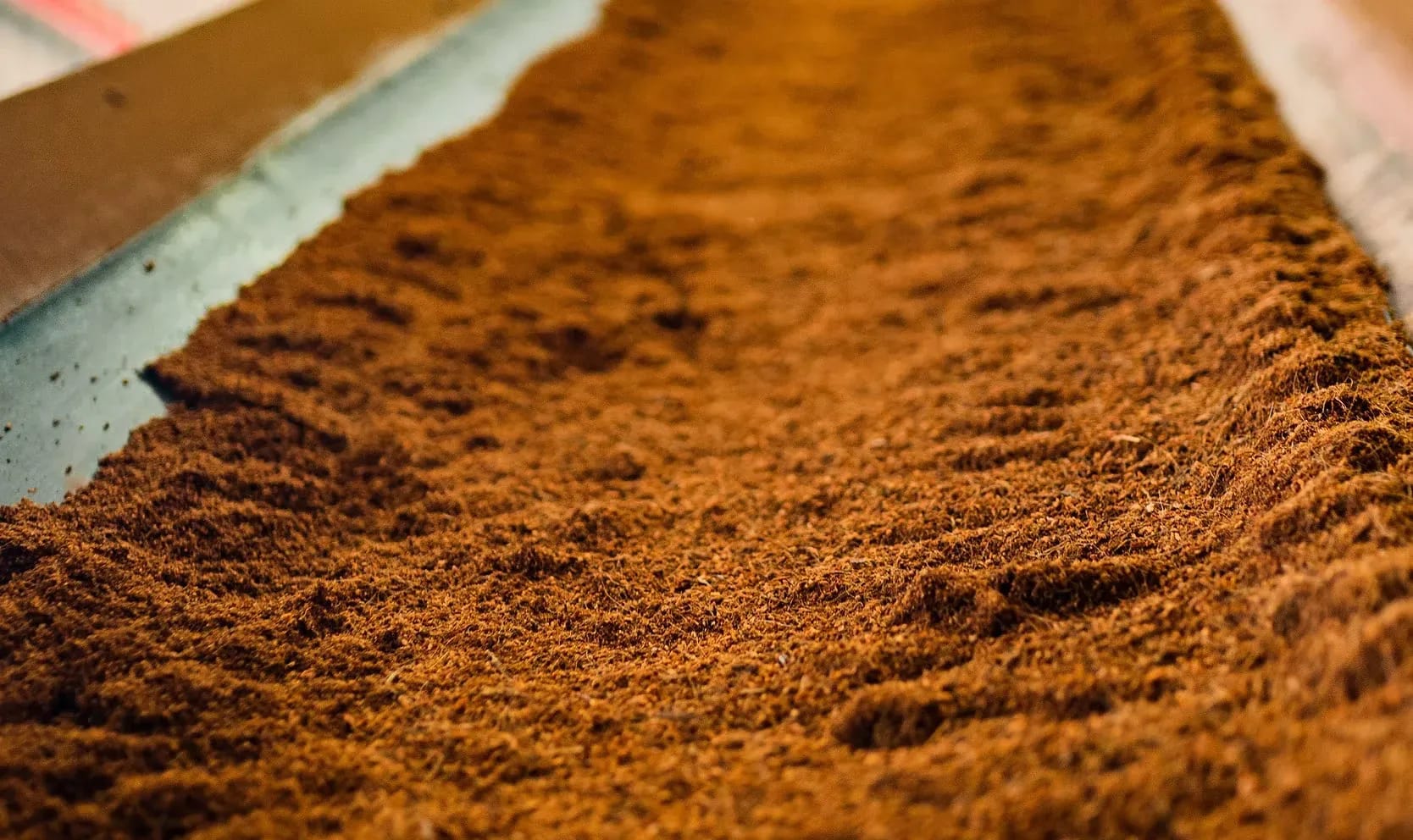
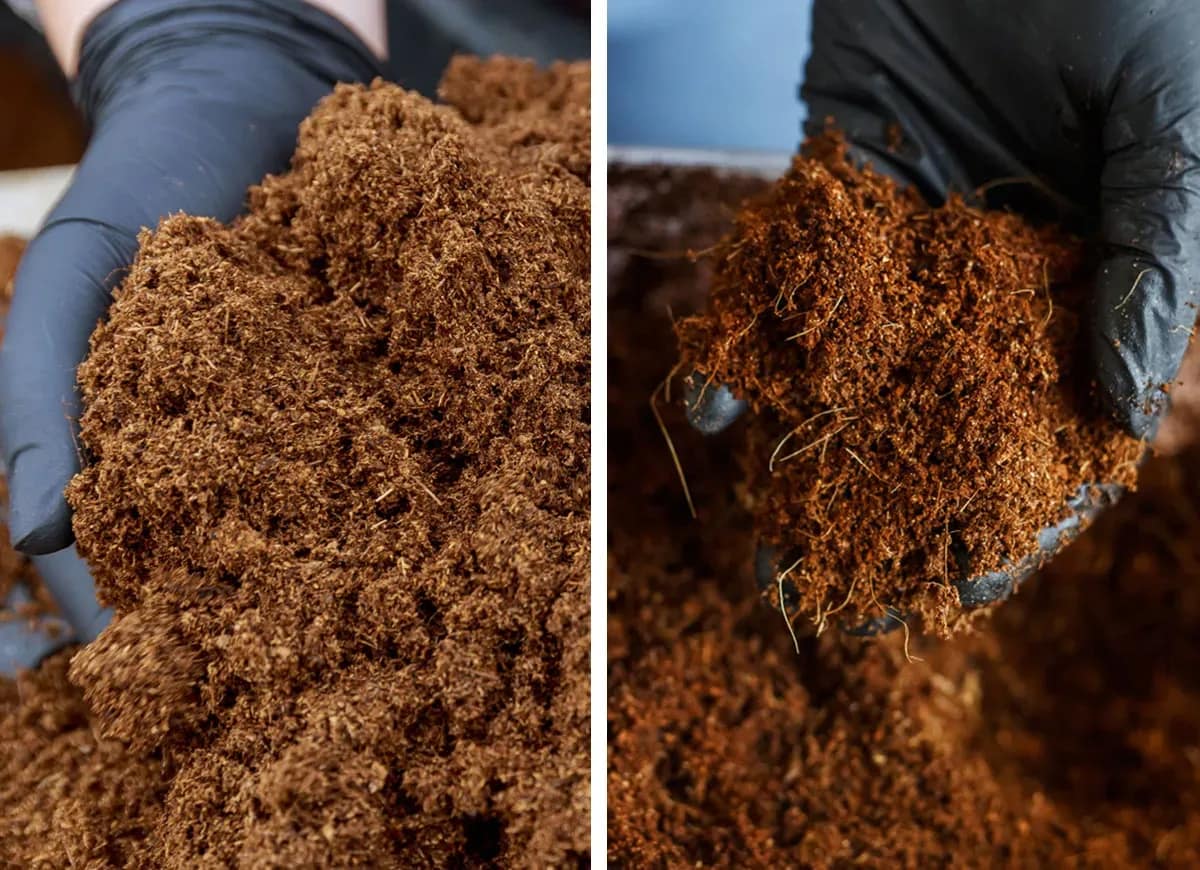
Coconuts have a thick fibrous husk between the outer shell and the inner nut. That husk is made of two things: long coir fibre (used for rope, mats, and erosion-control products) and a fine, spongy pith left over once the fibre is stripped out. That pith — sometimes with small chunks of husk mixed back in for aeration — is what's sold as coco coir or coco peat as a growing medium.
Raw coco pith straight off the husk is high in natural salts (particularly potassium and sodium) and needs to be washed, and usually pH- and EC-buffered, before it's safe for sensitive crops. Quality varies enormously between suppliers depending on how thoroughly it's washed, tested, and buffered — which is why growers who've been burned by a bad batch tend to ask pointed questions before ordering at scale.
Coco Coir vs. Coco Peat vs. Peat Moss
"Coco coir" and "coco peat" are generally used interchangeably to describe the same processed coconut pith product. Peat moss is a different material entirely — harvested from peat bogs rather than coconut husks — and behaves differently in a grow: different pH out of the bag, different rewetting behaviour, different sustainability profile. For a full side-by-side comparison of drainage, pH, cost at scale, and sustainability, see our Coco Coir vs. Peat Moss comparison.
| Property | Coco Coir | Peat Moss |
|---|---|---|
| Source | Coconut husk byproduct | Harvested peat bogs |
| Natural pH | ~5.5–6.8 (near neutral) | ~3.5–4.5 (acidic) |
| Rewetting | Rewets easily once dry | Can repel water when dry |
| Renewability | Byproduct of an annual crop | Slow to regenerate (centuries) |
| Cal-Mag handling | Needs buffering (high CEC) | Lower CEC, less buffering need |
Buffered vs. Unbuffered Coco Coir
This is the single most important quality question to ask before buying coco coir at commercial scale. Coco coir naturally binds calcium and magnesium, pulling those elements away from your plants' roots unless the substrate has been pre-saturated ("buffered") with a calcium-magnesium solution before it reaches you. Unbuffered or poorly buffered coco is the leading cause of mystery cal-mag deficiencies in growers who've just switched to coco. For the full breakdown — what buffering actually does, how to do it yourself if needed, and warning signs of a bad batch — see Buffered vs. Unbuffered Coco Coir.
Quick check: ask any supplier for their EC (electrical conductivity) and pH test results before ordering. Well-processed coco coir should test below roughly 0.5–0.8 mS/cm EC and 5.5–6.8 pH straight out of the bag.
Types of Coco Coir Products
Coco coir is sold in several formats depending on how growers want to use it:

Compressed Blocks & Bricks
Dense, dehydrated blocks that expand several times their size once hydrated with water. Space-efficient for shipping and storage.
Pre-Filled Grow Bags
Ready-to-plant bags in various sizes, popular for hydroponic and greenhouse production where consistency matters most.
Husk Chips
Chunkier pieces of the husk, added to loose coir or used alone for extra drainage and aeration in the root zone.
Propagation Plugs & Pellets
Small-format coco for seed starting and cloning, minimizing transplant shock versus rockwool or soil.
See the full product range for specs, sizing, and wholesale pricing on each format.
Key Use Cases
Cannabis Cultivation
Coco coir is one of the most widely used substrates in licensed cannabis production because it drains fast, supports precise fertigation (feeding through irrigation), and — when properly buffered — avoids the cal-mag issues that can wreck a flowering cycle. See our dedicated guide to coco coir for cannabis growing in Canada for EC/pH targets and buying considerations specific to licensed producers.
Commercial Greenhouse & Hydroponics
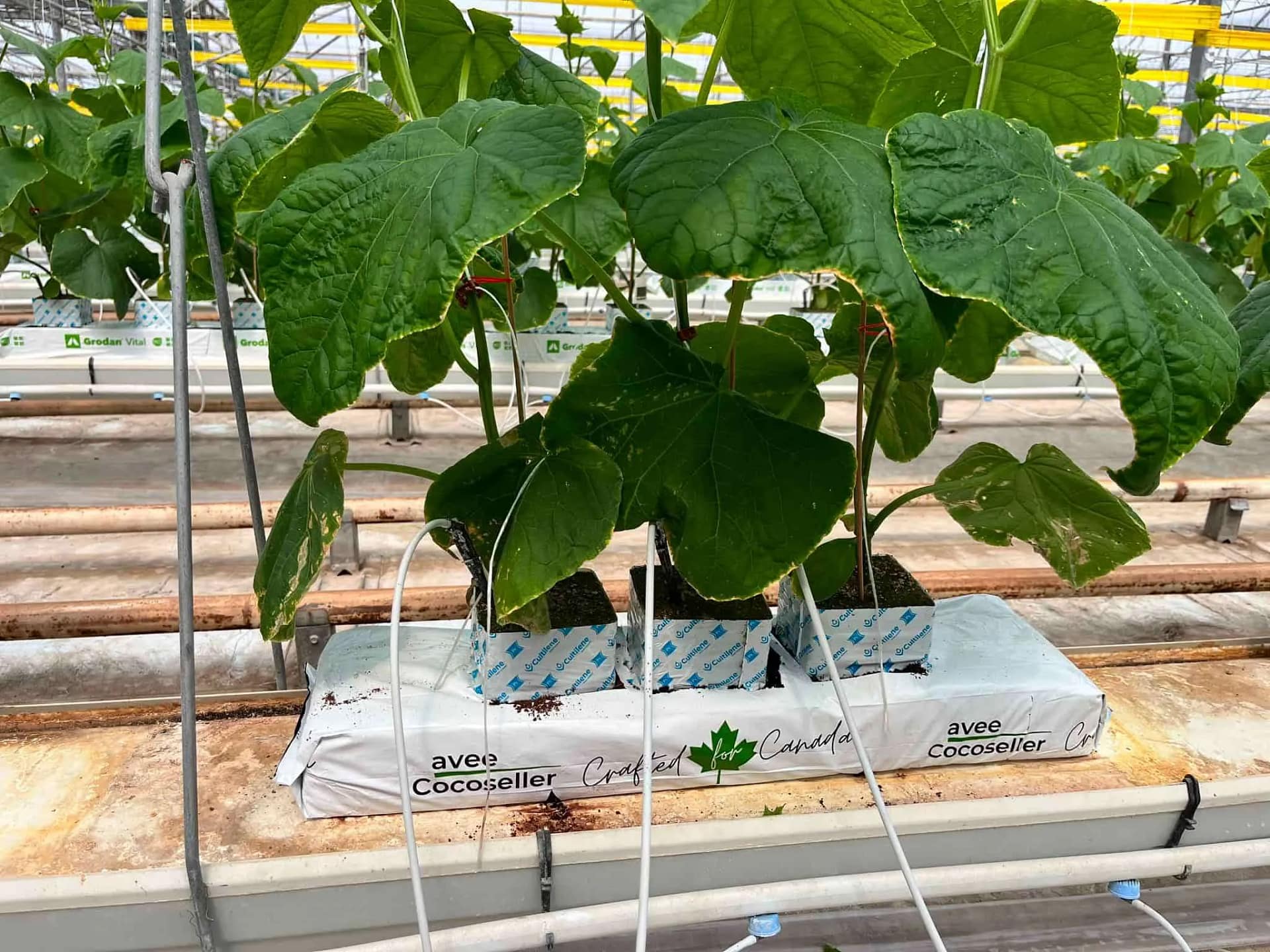
For greenhouse tomatoes, cucumbers, peppers, strawberries, and other hydroponic crops, coco coir's consistent structure and drainage make it a common alternative to rockwool. Explore our hydroponic solutions by crop type for slab and grow-bag sizing guidance.
Nurseries & Retail Growers
Nurseries and garden centres use coco coir as a peat-free, easy-to-rewet component in potting mixes, and increasingly as growing regulations tighten around peat harvesting in some regions.
Choosing a Supplier: What to Check
Quality and consistency vary a lot between suppliers. Before ordering at any real volume, it's worth confirming:
- Batch Documentation Available — ask for actual test results, not just marketing claims
- Buffering status — pre-buffered coco saves 48–72 hours of prep time per batch at commercial scale
- Washing process — poorly washed coco carries excess salts that show up as nutrient problems later
- Consistency batch to batch — ask how the supplier controls for variation between shipments
For a step-by-step breakdown of what to check before placing a bulk or pallet order, see How to Buy Coco Coir: A Wholesale Buying Guide. For general product and buffering questions, our Coco Coir FAQ covers 22 of the most common grower questions.
Is coco coir the same as coco peat?
Yes — the terms are used interchangeably for the same processed coconut-husk pith product used as a growing medium.
Can I reuse coco coir?
Many growers reuse coco coir for 2–3 cycles if it's flushed and re-buffered between uses, though commercial operations often replace it each cycle for consistency.
Is coco coir better than soil?
Coco coir offers more control over water, air, and nutrients than soil, which is why it's the preferred medium for precision commercial growing — though soil remains simpler for casual home gardening.
Sourcing Coco Coir for a Commercial Grow?
Factory-direct coco coir for commercial growers in Canada and the USA, with Mexico delivery expanding. Confirm product specifications, applicable batch documents, current inventory and dispatch timing in your quote.