 Skip to main content
- Home
- About
-
Grow mediaCoco peat blocks Bulk loose coir pith Coco husk chipsGrow bagsCoir grow bags Open-top grow bagsPropagationSeed starter pellets Propagation cubes Coir fibre bales View all products →
-
By cropCannabis Tomatoes StrawberriesBy applicationGreenhouse Horse bedding Mushroom substrate All solutions →
From Coconut Husk to Grow Bag: How Coco Coir Is Actually Made
Most growers buy coco coir the way they buy potting soil — as a finished product on a shelf, with no real idea what happened before it got there. But coco coir isn't mined or synthesized. It starts as a waste stream from the coconut industry, and turning it into something safe to grow cannabis, vegetables, or propagate clones in takes several distinct industrial steps — most of which never make it onto a product label.
We manufacture our own coco coir at two production units in Tamil Nadu, India, so we can walk through that process in specific, verifiable detail — not the generic "made from coconut husks" line every coir brand uses. Here's what actually happens between a coconut husk and a bag of substrate on your growing bench, and why skipping any of these steps is how growers end up with inconsistent, high-salt, or contaminated coco.
Coco Coir Started as a Waste Product — Literally
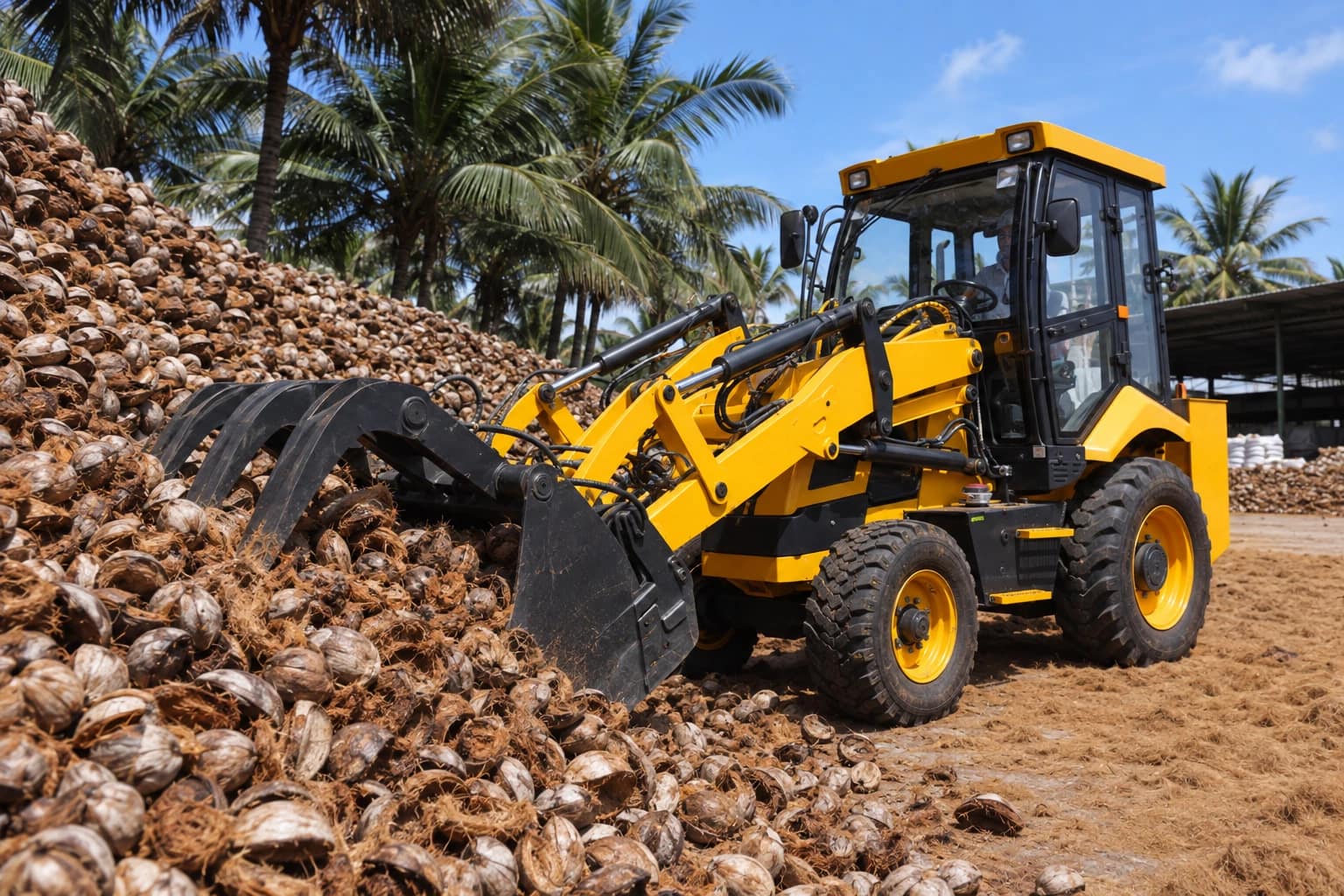
For most of the 20th century, coconut husks were a disposal problem, not a resource. The fibre in the husk — used for rope, mats, and brushes — was the valuable part; the leftover pith, the spongy material packed between the fibres, was burned or dumped near processing sites across coastal India and Sri Lanka. It wasn't until horticulturalists noticed the pith's water-holding and aeration properties, decades later, that it was repurposed as a growing medium at all.
That backstory matters, because it explains why quality varies so much between suppliers. Coir is a processing byproduct, not a purpose-grown crop, and the industry that turns it into a horticultural substrate is still relatively young — there's no single universal standard everyone follows. What ends up in your bag depends entirely on which of the steps below your specific supplier actually performs.
The Process, Step by Step
Here's the real sequence from raw husk to a bag you can hydrate and plant into, using our own Peravurani and Pollachi facilities as the working example.
Husk Collection at the Source
We collect coconut husks directly at our own production units in Peravurani (Thanjavur district) and Pollachi (Coimbatore district) — two established coir-processing regions in Tamil Nadu, chosen for husks with low impurity levels and strong, consistent fibre structure. Because we run collection ourselves, there's no reseller upstream mixing in husks of unknown origin or age.
Retting and Defibering
Husks are soaked (retted) to loosen the fibre from the pith, then mechanically defibered to separate the two. This is the step where the coarse fibre — the part that becomes rope, mats, and geotextiles — is split off from the pith, which is the fraction that eventually becomes your growing substrate.
Screening and Aging
Raw pith is screened to remove sand, stones, and large debris, then aged to reduce natural tannins and break down excess lignin. Pith that's rushed through this stage retains more phenolic compounds — part of why some low-grade coco coir smells sour or leaches tea-coloured runoff on the first watering.
Triple Washing
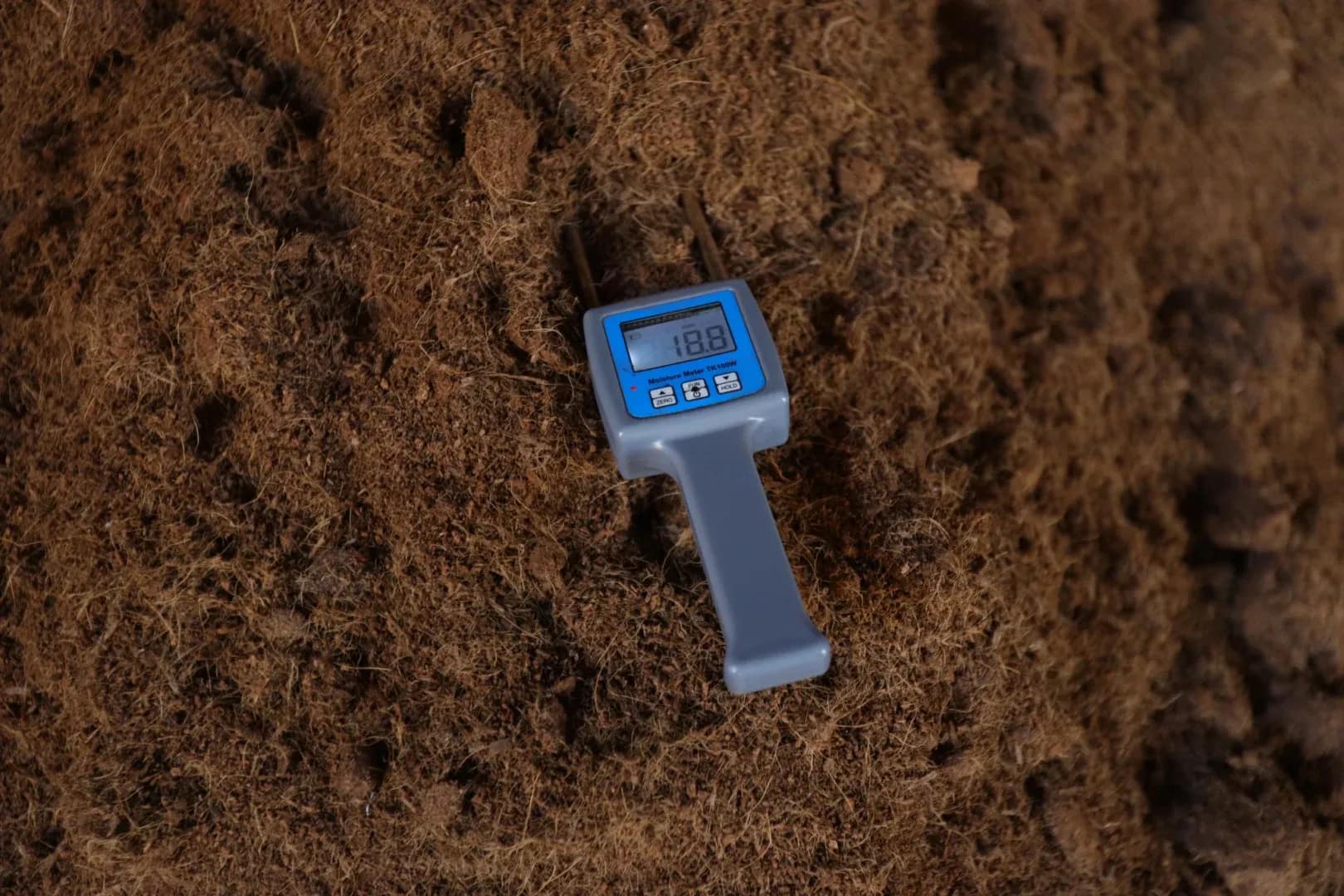
This step decides your EC. Raw coir carries residual sodium and chloride from the coconut itself and, depending on region, from seawater exposure during processing. We wash our pith three times in sequence with fresh water, which is how we consistently land under 0.5 mS/cm — safe even for cannabis clones and seedlings, where high EC is the fastest way to lose an early cycle.
Calcium Buffering and pH Calibration
Coco coir has a naturally high cation exchange capacity — it binds calcium and magnesium ions and holds onto them, which causes lockout deficiencies in your plants if it isn't pre-saturated first. We buffer with a calcium solution and calibrate pH to 5.5–6.5 before the product ever leaves the facility, so growers aren't the ones discovering this the hard way three days after transplant (we've covered exactly what that failure looks like in our buffered vs. unbuffered guide).
Batch Lab Testing
Request the applicable EC, pH and other batch documentation before ordering. Target EC is below 0.5 mS/cm where specified; the product, test method and batch result must be confirmed. Testing scope, COA availability and suitability for your records are confirmed for the order.
Compression, Warehousing, and Direct Shipping
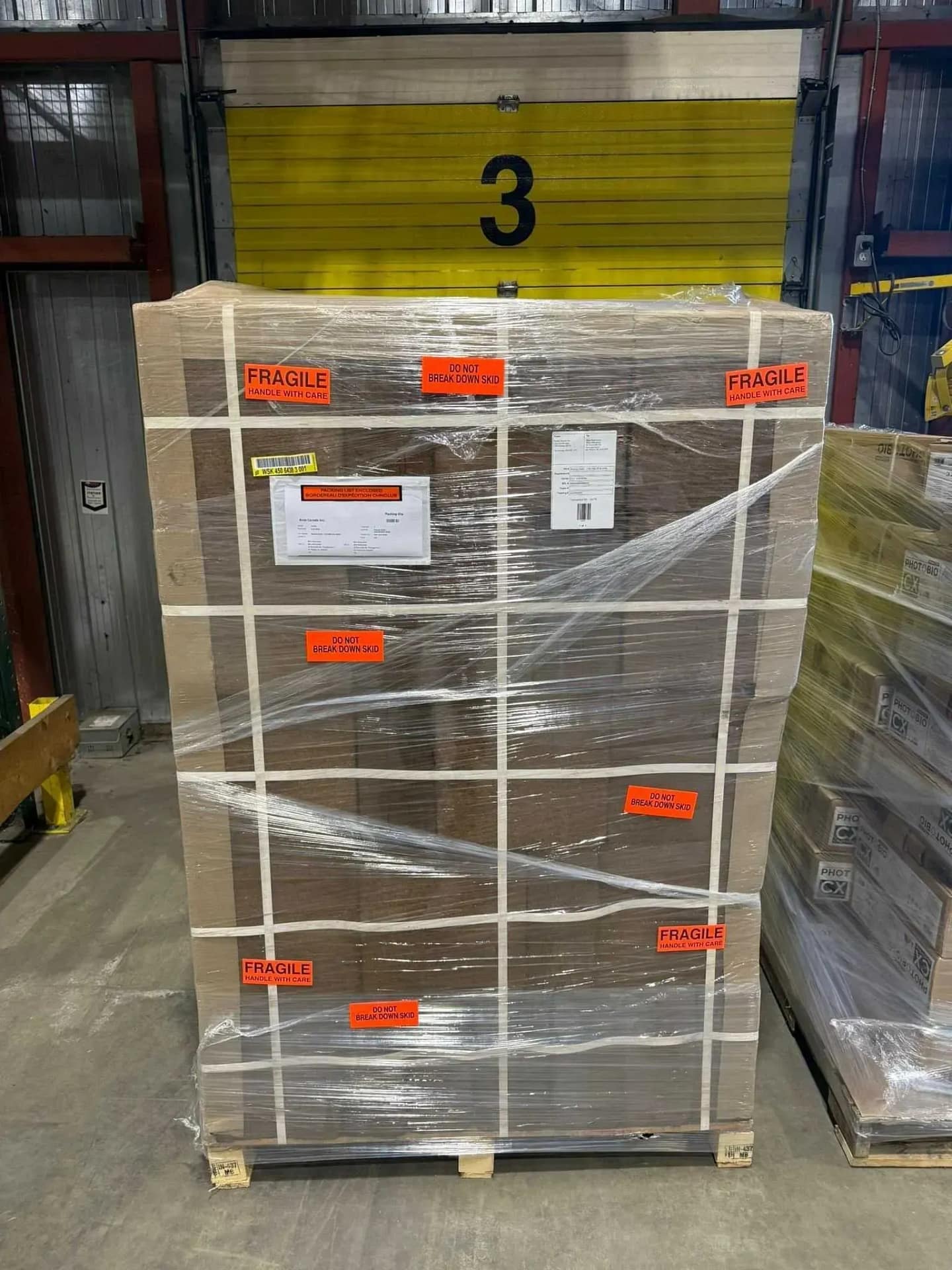
Approved batches are compressed into blocks or bagged loose, then shipped to our own warehouse in Cambridge, Ontario — not a third-party distribution centre. From there it goes straight to your facility across Canada, the USA, and increasingly Mexico, with no reseller adding markup or handling time in between.
We don't buy coir from someone else's factory and put our label on it. Every step above happens on equipment we own, at facilities we run.
What Gets Skipped When Coco Coir Changes Hands Too Many Times
Most coco coir sold in Canada and the USA passes through three or four sets of hands before it reaches a grower: a factory, an exporter, an importer, and often a regional distributor on top of that. Every link in that chain adds cost — and every link is also a place where traceability and quality-control information can get lost. None of it is necessarily done in bad faith; it's just that a distributor two steps removed from the factory has no way to independently verify a wash count or a lab result they were simply told about.
What you're actually getting
- Origin and processing history usually unknown
- Wash count and EC not independently verifiable
- Buffering status often unstated on the bag
- Lab documentation rarely available on request
- Batch-to-batch consistency depends on blending, not control
What you're actually getting
- Traceable to a specific production unit and batch
- EC and pH verified before it leaves the factory
- Buffering status documented, not assumed
- Lab certificates available on request
- Production specifications confirmed for the ordered product and batch.
Why This Actually Matters for Your Grow
None of this is abstract quality-control trivia — it shows up directly in your results. Unverified, high EC is one of the most common causes of early-cycle salt stress, especially in EC-sensitive crops like cannabis clones and seedlings. Skipped buffering is the single biggest cause of the calcium/magnesium deficiency growers report in their first week after transplant. And batch-to-batch inconsistency from blended, untraceable sourcing is why some growers report that a supplier's coco "used to work fine" and then suddenly doesn't.
For licensed cannabis producers and commercial greenhouse operations specifically, batch documentation isn't optional — it's part of meeting quality-control requirements under frameworks like Health Canada's Good Production Practices. That's only possible if a supplier can produce lab results tied to your actual batch, not a general claim about their product line.
How to check your current supplier: Ask two questions — which specific facility processed this batch, and can you provide EC/pH/pathogen results for it. A supplier that manufactures its own coir can usually answer both within a day. A reseller several links down the chain often can't answer either.
Coco Coir Quality Is Decided Long Before It Reaches Your Grow Room
Washing, buffering, and lab testing aren't marketing add-ons — they're the steps that separate a substrate you can rely on from one that might surprise you mid-cycle. The only way to know which steps your coco actually went through is to buy from a supplier who can trace it back to a specific facility and batch. We can, because we run the facility. Read the full story of our Tamil Nadu operation here, or go straight to request batch documentation for your next order.
Common Questions
Is all coco coir washed the same number of times?
No. There's no industry-wide standard — some suppliers wash once, some don't wash at all before export, and buyers rarely see the actual count. We wash three times specifically to reach EC under 0.5 mS/cm.
Why does EC matter so much in coco coir?
EC measures dissolved salts in the substrate. High-EC coco can stress or burn seedlings and cannabis clones and cause unpredictable nutrient uptake for the rest of the cycle, even if you feed correctly afterward.
How can I tell if my current coco coir was lab tested?
Ask your supplier for the specific batch's EC, pH, and pathogen test results. If they can't produce documentation tied to your batch, it likely wasn't tested — or wasn't tested by them directly.
Does buffering happen automatically during washing?
No — washing and buffering are separate steps. Washing removes sodium and chloride; buffering pre-saturates the coco with calcium and magnesium so it doesn't pull those elements from your nutrient feed. Coco coir can be washed perfectly and still cause deficiencies if it was never buffered.
Factory-Direct Coco Coir, Batch-Tested Before It Ships
Triple-washed, pre-buffered, and lab-verified at our own Tamil Nadu facilities — stocked in Ontario, shipped across Canada, the USA, and Mexico.