 Skip to main content
- Home
- About
-
Grow mediaCoco peat blocks Bulk loose coir pith Coco husk chipsGrow bagsCoir grow bags Open-top grow bagsPropagationSeed starter pellets Propagation cubes Coir fibre bales View all products →
-
By cropCannabis Tomatoes StrawberriesBy applicationGreenhouse Horse bedding Mushroom substrate All solutions →
Wholesale Coco Coir for Laval Greenhouses and Urban Farms
Bag-culture greenhouse rows, rooftop containers with load limits, indoor vertical racks measured in centimetres — Laval's growing operations don't share one root-zone answer. Match a coco coir format to your system, then see what freight from Ontario into Quebec honestly looks like.
Laval's growing footprint doesn't look like a conventional field farm. Quebec's commercial urban-agriculture sector counted 202 enterprises in 2025, up from 175 the year before, and the Montreal region — Laval included — accounts for roughly 80 of them. Laval itself recorded 10 urban-agriculture enterprises in the same survey, inside a municipal agricultural zone of about 7,136 hectares tied to an agri-food sector worth roughly $324 million in GDP and more than 150 enterprises. Over 61% of surveyed Quebec urban-ag operations run controlled-environment systems, and 81% use vertical-farm or hydroponic formats — which is why a single generic grow-bag page doesn't answer what Laval buyers are actually asking.
Sources: AU/LAB, Portrait de l'agriculture urbaine commerciale du Québec en 2025 (Mar. 2026); Laval Économique, agri-food sector profile.
Which Growing System Are You Running?
Root-zone format, drainage design, and storage footprint all follow from the production system — start by identifying which one you're running.
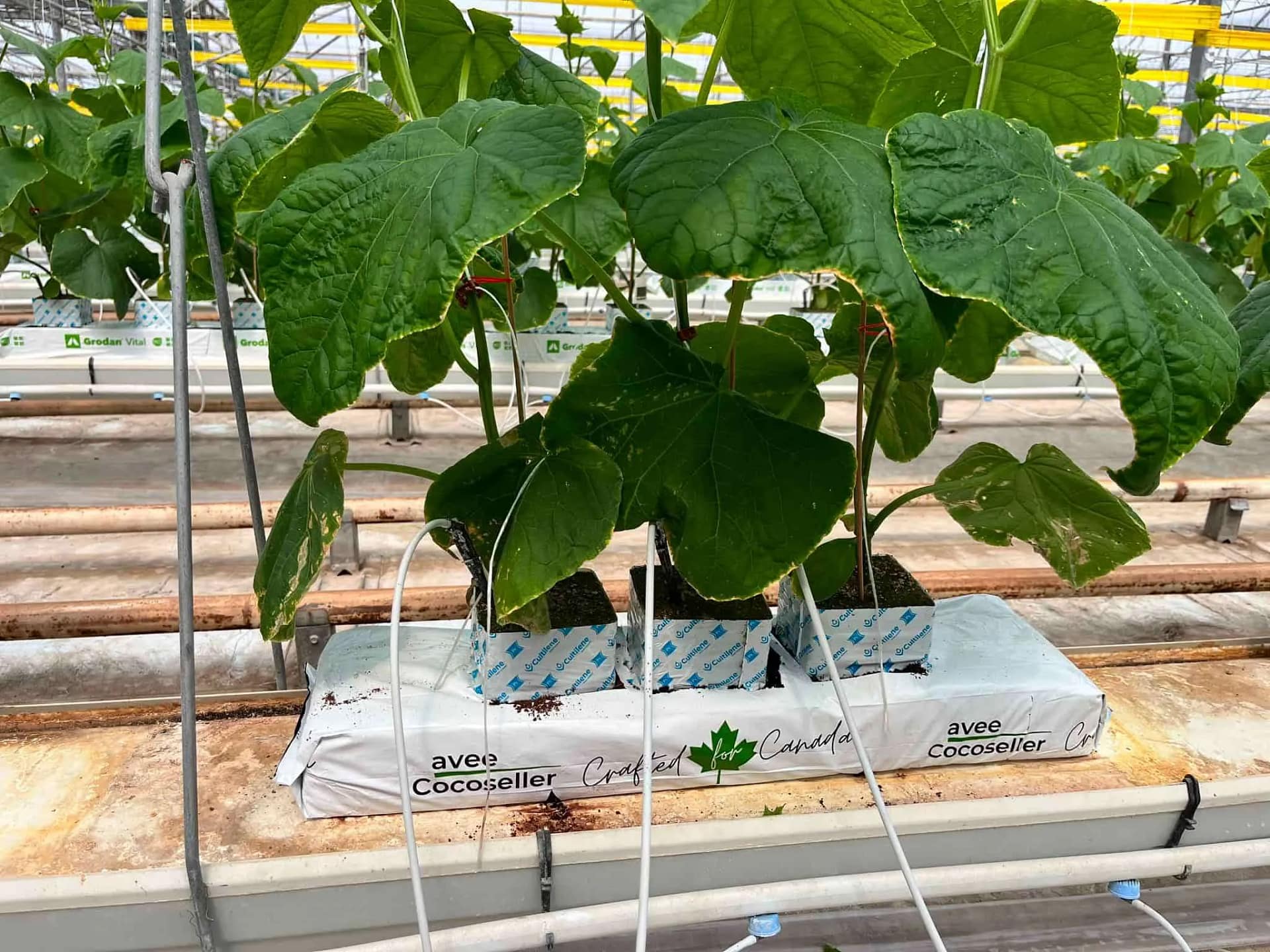
Greenhouse Bag Culture
Bay-based rows on drip irrigation, with grow bags or slabs set along benches or gutters. The limiting factor is usually bench and aisle width, not floor area.
Grow bags · slabs
Indoor Vertical Farm (CEA)
Multi-tier racks under controlled lighting, where tray depth and drainage design drive substrate choice more than floor footprint.
Loose coir · propagation cubesRooftop Container Growing
Elevated production with a hard structural load limit. Compressed weight and fully hydrated weight can differ substantially — that difference matters before you order volume.
Container bags · 5kg blocksRunning a hybrid setup? Describe your bench, rack, or rooftop specifications when you contact us and we'll help place it correctly before you order.
Coco Coir by Root-Zone Format
Each system above pairs naturally with one or two coir formats. Full specifications live on the product pages.
Grow Bags
Pre-filled, compressed coco substrate in a working ~40 GSM non-woven fabric (subject to final confirmation), sized to bench and gutter systems. Custom dimensions may be available on confirmation.
View Grow Bag Products →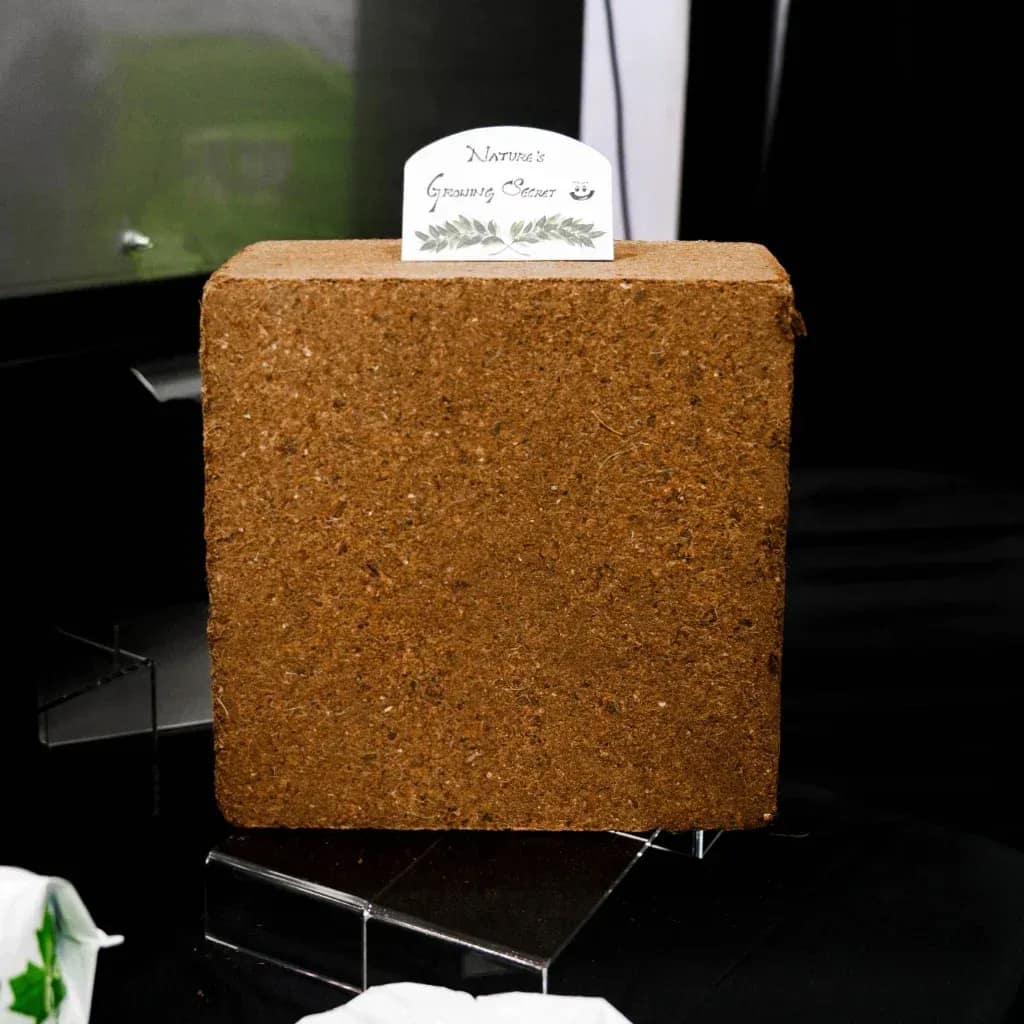
5kg Coco Peat Blocks
5 kg ±0.3 kg compressed blocks, roughly 30×30×12 cm, expanding to about 70–75 L. Triple-washed, pH 5.5–6.5, EC tested below 0.5 mS/cm by a stated method — compact and palletizable for restricted rooftop receiving.
View Coco Peat Blocks →
Propagation Cubes
Peat-free, coco-based propagation cubes for seedling and clone starts — a common entry point before plants move to their production tray or bag.
View Propagation Cubes →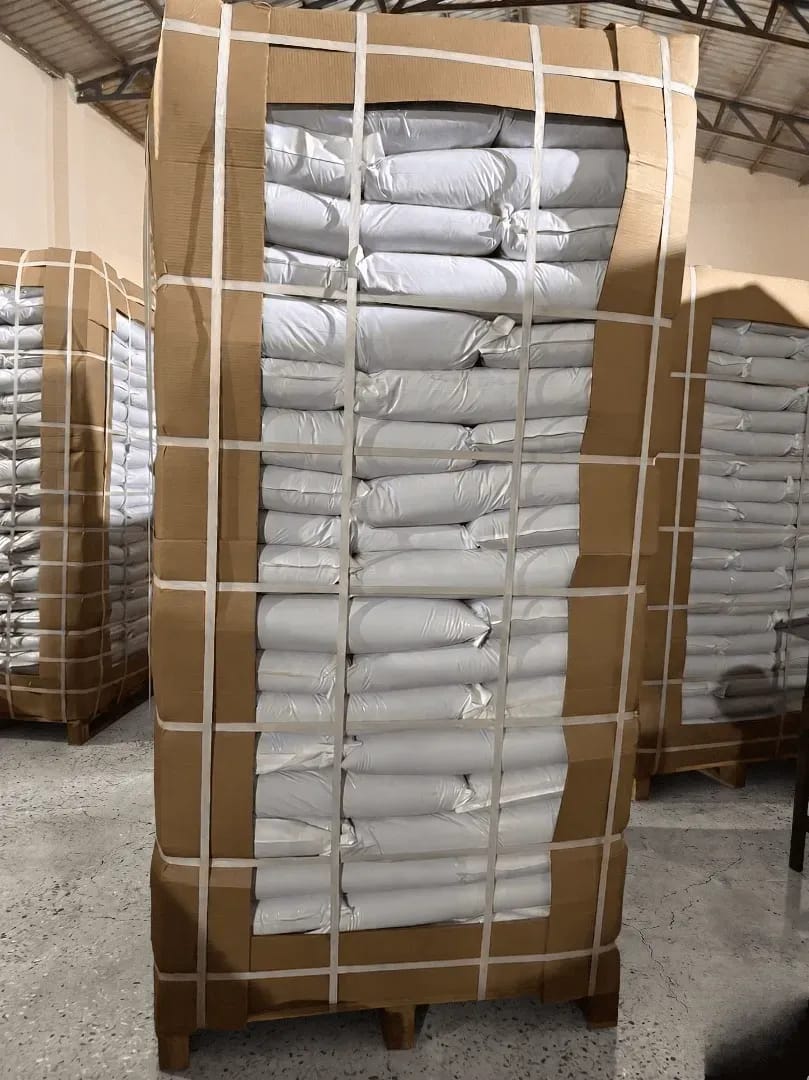
Loose Coco Coir
Unblended loose coir for custom tray mixes, blended to the ratio an indoor vertical or CEA operation specifies, rather than one fixed formulation.
Space and Storage Considerations for Dense Urban Sites
Laval sites tend to share one constraint a rural greenhouse rarely faces: the receiving dock, freight elevator, or rooftop hoist is often the real bottleneck, not the growing area itself. Compressed formats — grow bags and 5 kg blocks — reduce inbound freight volume and storage footprint until point of use, which matters when a dock has a narrow access window or a hoist has its own load limit. For larger orders, ask about staged shipments where storage between planting cycles is limited.
Confirm your receiving access — dock height, elevator dimensions, or hoist capacity — when you submit your specification, so we can flag anything that affects how an order is palletized.
Greenhouse vs. Rooftop Procurement — What's Different
Greenhouse Bag Culture
Bag-culture orders typically follow a seasonal or crop-cycle schedule, timed to bench turnover, with volume driven by row count and bag spacing — a predictable calendar most greenhouse operators already run.
Rooftop Container Growing
Rooftop systems should confirm structural load before ordering volume — compressed and fully hydrated weight can differ substantially, and an engineered load limit doesn't move to fit a larger order. Confirm capacity with your building engineer first.
How Freight Moves from Cambridge, Ontario to Laval
Avee's Canadian warehouse sits in Cambridge, Ontario, connected to the Montreal region — Laval included — by a long-haul corridor.
Stock at Cambridge is confirmed per order and never guaranteed or held year-round — contact Avee to confirm current availability before setting a delivery date. Transit time and freight cost depend on the product, quantity, and destination postal code, so we don't publish a flat transit estimate or a fixed delivery window for Laval. Cambridge pickup is by appointment only. Full-container volumes can be quoted directly from our Pollachi and Peravurani, Tamil Nadu production facilities.
Provide your delivery postal code, product, and quantity for a current freight estimate.
A French-Language Version Is Recommended
This page is written in English. Given Laval and the wider Quebec market's francophone buyer base, a separately and natively written French-language version — not a machine translation — is the recommended long-term approach for this content. Prefer to discuss your project in French? Note that in your message and we'll route it accordingly.
Growing-System Questions from Laval Buyers
How do I know if my rooftop system can handle a given volume?
Share your rooftop's engineered load limit and the format you're considering, and we'll help work out a compressed-vs-hydrated weight range. Your structural engineer's sign-off decides.
What's the substrate difference between bag culture and indoor vertical?
Bag culture uses a compressed grow bag sized to a bench or gutter system; indoor vertical more often uses loose coir blended to a tray-specific ratio, or propagation cubes early on.
How far ahead of planting should I order for freight timing?
There's no fixed window we can promise, since transit depends on product, quantity, and postal code. Provide those details early for a current freight estimate.
Is Cambridge stock guaranteed for Quebec orders?
No — availability is confirmed per order, not held year-round. Contact Avee to confirm current stock before specifying a delivery date.
Can I see EC and pH test documentation before ordering?
Yes. EC and pH are tested to target using a stated method, and a Certificate of Analysis is available on request.
For Quebec and Format-Specific Buyers
Specify Your Laval Growing System
Tell us your production system — greenhouse bag culture, rooftop container, or indoor vertical — target volume, and delivery postal code. We'll confirm the coco coir format that fits and a current freight estimate.
Specify Your Laval Growing System