 Skip to main content
Coco Coir FAQ Canada — The Basics
What coco coir is and why Canadian growers choose it
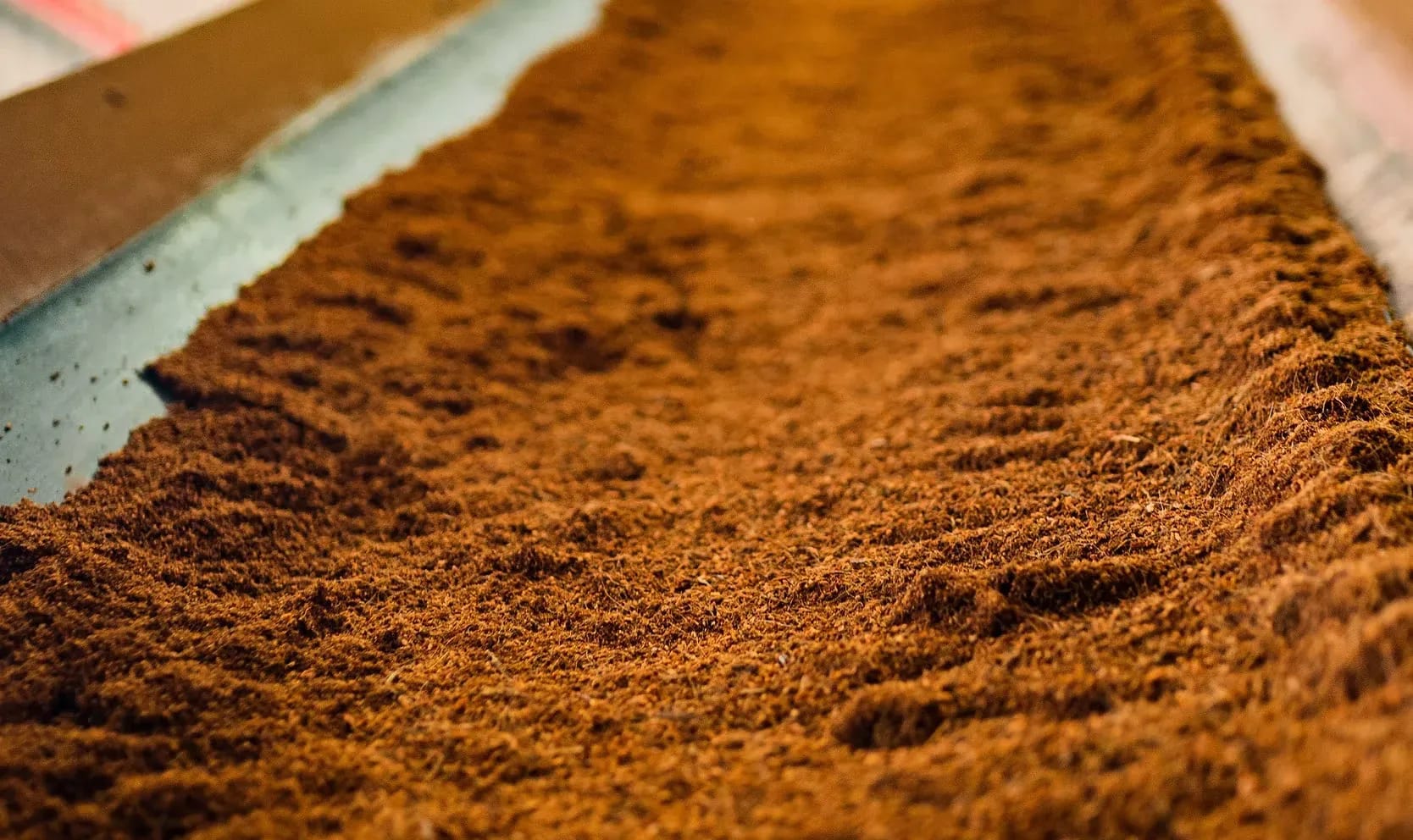
Coco coir is a natural growing medium made from the fibrous husk of coconuts — the material between the hard shell and the outer coat. It is a renewable byproduct of the coconut food industry that would otherwise be discarded as agricultural waste.
Our coco coir is processed in Pollachi, India — the world's premier coconut husk region — then triple-washed, calcium-buffered, and shipped to our Canadian warehouse for fast distribution across Canada.
Available as compressed 5kg blocks, pre-filled grow bags, propagation cubes, and bulk loose coir — the most versatile growing medium for Canadian growers today.
These three terms confuse many growers. Here is the clear breakdown:
- Coco Peat (Coir Pith): Fine, soil-like material from the inner husk dust. Excellent water retention. The base of our 5kg coco peat blocks.
- Coco Husk Chips: Chunky pieces of coconut husk shell. Superior drainage and aeration — ideal for cannabis, orchids, and hydroponic systems. Available in our Coco Husk Block.
- Coco Coir (broad term): Covers all forms — pith, husk chips, and blended substrates combining both for specific crop requirements.
Avee Cocoseller offers all formats. Contact us to find the right format for your crop and growing system.
For greenhouse, hydroponic, and cannabis growing in Canada, coco coir significantly outperforms peat moss:
- pH stability: Coco coir naturally holds pH 5.5–6.8**. Peat moss is highly acidic (pH 3.5–4.5) and requires lime correction every season.
- Sustainability: Coco coir is a coconut waste byproduct. Peat moss harvesting destroys fragile Canadian bog ecosystems and releases stored carbon.
- Reusability: Coco coir lasts 2–3 crop cycles. Peat moss is single-use.
- Root performance: Better aeration, faster root development, and less pH drift throughout the full growing season.
Both are popular in Canadian commercial greenhouses — but coco coir has meaningful advantages:
- Biodegradable: Coco coir composts naturally after use. Rockwool requires special industrial waste disposal.
- Crop steering: Our coco coir grow bags feature high Air Filled Porosity (AFP), enabling faster root zone dry-down for precise vegetative/generative switching.
- Disease resistance: Natural lignins in coco coir reduce Pythium pressure — especially valuable in Ontario's humid winter growing conditions.
- Cost: Factory-direct coco coir pricing is consistently more competitive than rockwool for Canadian greenhouse operators.
We offer trial pallets for growers evaluating the switch. Ask us to arrange a sample.
Coco coir supports virtually every crop grown commercially and at home across Canada:
- Tomatoes — Primary substrate in Leamington and Niagara commercial greenhouse operations
- Cucumbers & Peppers — Excels in open top grow bags
- Strawberries & Berries — Superior moisture management for year-round BC and Ontario production
- Cannabis — Preferred substrate for Canadian licensed producers, micro-cultivators, and home growers
- Leafy Greens & Herbs — Fast production cycles in hydroponic systems
- Propagation — Our propagation cubes for seeding and cloning
- Ornamentals & Nursery — Weed-free, sterile medium for garden centres across Canada
Ready to Try Avee Coco Coir in Canada?
Calcium-buffered. Shipped fast to every Canadian province. Browse the full product range or request a wholesale quote. Batch documentation is available on request.
Coco Coir FAQ Canada — EC, pH & Quality
Lab testing, buffering protocols, and technical specifications
Yes. Every Avee batch is calcium-buffered — and this is the single most important quality factor in coco coir, and the one most commonly skipped by cheap suppliers.
Raw coconut husk grows in coastal, salty environments and naturally holds high potassium and sodium. When you feed unbuffered coir, the substrate steals calcium and magnesium from your nutrients before plants can absorb them. The result: Cal-Mag deficiency even when you're feeding correctly.
What buffering does: A calcium solution is flushed through the coir to saturate all cation exchange sites, displacing sodium and potassium. After buffering, your nutrients reach your plants — not the medium.
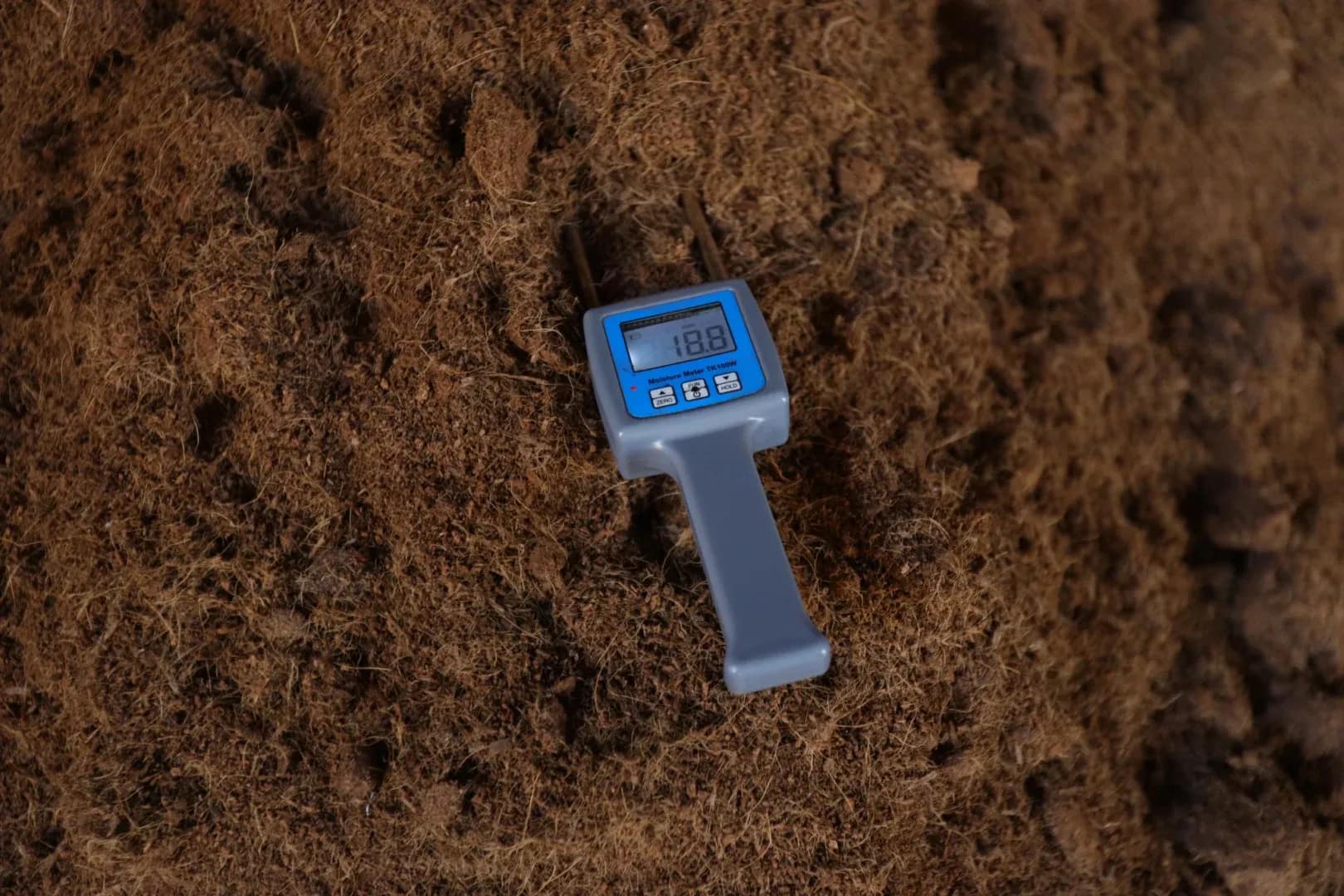
Avee coco coir is consistently tested at EC below 0.5 mS/cm — classified as low-EC, washed coir. This is the gold standard for hydroponic and cannabis growing in Canada.
Electrical Conductivity (EC) measures total dissolved salt content. High-EC coir causes nutrient absorption interference, stunted early vegetative growth, tip burn on sensitive crops, and unpredictable fertigation results season-long.
What to demand when buying coco coir in Canada: Always ask for a batch EC certificate. If a supplier won't provide one, don't buy from them.
All Avee substrates hold a stable pH of 5.5–6.8** — the optimal range for nutrient availability in soilless and hydroponic cultivation.
- pH 5.5–6.0 — Ideal for cannabis, hydroponic lettuce, herbs
- pH 6.0–6.5 — Optimal for greenhouse tomatoes, cucumbers, sweet peppers
- pH 6.5–6.8 — Suitable for strawberries, ornamentals, nursery stock
Batch pH verification is included in quality documentation — request yours when ordering from Avee Cocoseller.
Because we own the full supply chain from factory to Ontario warehouse, we control quality at every step:
- Triple-washing: Removes excess sodium, chloride, and potassium from raw husks
- Calcium buffering: Saturates cation exchange sites to eliminate nutrient lockout
- Particle grading: Sieving ensures consistent chip-to-pith ratio across every batch
- Lab testing: EC and pH verified before compression and containerisation
- Pathogen screening: Sterile, weed-free substrate confirmed before export
Products ship from our Canadian warehouse and are distributed Canada-wide. Unlike resellers, we have direct visibility into processing and provide documentation for every stage.
Coco Coir FAQ Canada — Cannabis Growing
Specific guidance for licensed producers, micro-cultivators, and home growers
Coco coir is the substrate of choice for the majority of Canada's licensed cannabis producers — and for very good reason:
- Root oxygenation: High Air Filled Porosity (AFP) promotes explosive root development during early veg
- Crop steering: Precise dry-down control lets growers switch between vegetative and generative phases on demand — critical for maximising resin production
- Clean starting point: Our EC below 0.5 mS/cm gives full nutrient programme control from day one
- Calcium-buffered: Eliminates the number one coco coir problem for cannabis — Cal-Mag deficiency in early veg
- Reusable: Clean up and reuse 2–3 cycles, reducing substrate cost per gram of output
We supply coco blocks, pre-filled grow bags, and propagation cubes to cannabis producers from BC to Ontario to Nova Scotia.
Our recommended cannabis substrate setup for Canadian growers at each stage:
- Germination & cloning: Coco Coir Propagation Cubes — sterile, pre-buffered, sized for clone trays
- Early veg (home growers): 5kg Coco Coir Blocks — expand into fabric pots with 20–30% perlite
- Commercial production: Pre-filled Coco Coir Grow Bags — high AFP, ideal for licensed producers
- Heavy-feeding strains: Coco Husk Chips blended with coir pith — extra drainage prevents overwatering
Contact us with your licence type, room size, and strain profile and we will build the right substrate spec for your operation.
Yes — coco coir is one of the most sustainable growing media available to Canadian agricultural operators:
- Zero incremental carbon: Unlike peat harvesting which releases centuries of stored bog carbon, coco coir uses material that would otherwise be discarded
- Renewable indefinitely: Coconut palms produce continuously for 60+ years
- Green certification scores: Switching to peat-free substrates improves sustainability audit scores required by Canadian retail buyers and federal grant programmes
- Biodegradable end-of-life: After 2–3 seasons, used coco coir composts into soil amendment — unlike rockwool which requires industrial waste disposal
Wholesale Coco Coir for Canadian Cannabis & Greenhouse Operations
Factory-direct pricing. Batch test documentation. Sample pallets available. Talk to our team about your operation's substrate requirements.
Coco Coir FAQ Canada — Greenhouse & Hydroponic Use
Commercial applications for Canadian greenhouse and hydroponic operations
Ontario's greenhouse belt runs some of Canada's most intensive tomato, cucumber, and pepper production. Coco coir delivers tangible advantages:
- Tighter steering control: Our coco coir grow bags feature high AFP for faster root zone dry-down
- Lower disease pressure: Natural coir lignins reduce Pythium and root rot incidence in Ontario's humid winter growing conditions
- Predictable EC: Low, stable substrate EC means your fertigation strategy performs consistently all season
- Fast restocking: Reliable delivery from our Canadian warehouse to Essex County and Niagara Region
We offer trial pallets for growers evaluating the switch. Contact us to arrange a sample for your greenhouse.
Yes — our Coco Coir Grow Bags are our flagship product for Canadian commercial greenhouse vegetable production.
Pre-filled with compressed coir slab in UV-treated outer bags. Place on your gutter, hydrate via your drippers, and plant directly. Used across Ontario, BC, and Alberta greenhouses for high-wire tomato production, cucumbers, and sweet peppers.
Available in custom sizes — tell us your gutter width, plant spacing, and dripper layout and we'll spec the right bag for your operation.
Absolutely — coco coir is the most widely used substrate in Canadian commercial hydroponic operations. It is compatible with all major hydroponic system types:
- Drip irrigation: Most common in Canadian commercial greenhouse — consistent drainage and rewetting from slab to slab
- Dutch bucket systems: Loose coco coir + perlite blend in individual buckets — standard for Ontario tomato and pepper production
- NFT (Nutrient Film Technique): Coir blocks in net pots for leafy greens and herbs
- Flood and drain (Ebb & Flow): Works in ebb-and-flow tables for compact crops and propagation
Yes — because we're the manufacturer, not a reseller, we can customise substrates for your specific operation:
- 70/30 Coco-Perlite blends — pre-blended for maximum drainage in cannabis and berry production
- Custom chip-to-pith ratios — adjust moisture retention vs drainage for your crop type
- Custom bag dimensions — engineered to your greenhouse gutter measurements
- Specific EC/pH targets — processing adjusted for sensitive crops or challenging water quality
Contact us to discuss custom blending for your Canadian operation.
Coco Coir FAQ Canada — Ordering, Delivery & Wholesale
How to buy coco coir in Canada — pricing, shipping, and wholesale accounts
Avee Cocoseller ships coco coir to every Canadian province from our Canadian warehouse via tracked ground freight. We deliver to:
- Ontario (Leamington, Niagara, GTA, Ottawa)
- Quebec (Montreal, Quebec City, Laval)
- Alberta (Calgary, Edmonton)
- British Columbia (Vancouver, Fraser Valley, Kelowna)
- Saskatchewan & Manitoba (Regina, Saskatoon, Winnipeg)
- Atlantic Canada (Halifax, Fredericton)
For full pallets or container loads, we arrange direct freight to your facility. Contact us for a tailored freight quote.
Yes — wholesale and volume pricing is central to our business model. We offer factory-direct wholesale accounts to:
- Commercial greenhouse operations — any province, any scale
- Licensed cannabis producers and registered micro-cultivators
- Hydroponic farms and vertical growing operations
- Nurseries and garden centres across Canada
- Agricultural input distributors and soil blenders
Because we manufacture and ship directly, we offer significantly better pricing than Canadian coco coir resellers. Request a wholesale quote — We normally respond within one business day, Monday to Friday.
Yes — we strongly encourage commercial growers to trial our substrate before committing to a full season order.
With a sample, you can verify expansion volume and block consistency, real-world EC levels with your specific water source, chip particle size uniformity, and drainage behaviour in your exact system.
To request a sample, contact our team with your crop type, growing system, and location.
Yes — we ship year-round to all Canadian provinces, including through January and February.
Our compressed coco coir blocks are shipped at low moisture content specifically for Canadian winter logistics. The compressed format is freeze-resistant and stores in unheated warehouses all winter without any degradation in quality or expansion capacity.
Coco Coir FAQ Canada — How to Use It
Hydration, nutrients, watering frequency, and reuse across Canadian crop cycles
Our 5kg coco coir blocks are simple to rehydrate and ready to plant within 30 minutes:
- Place the compressed block in a large tray or container
- Pour 4–5 litres of water slowly and evenly over the top surface
- Allow 15–30 minutes for full expansion — one 5kg block expands to approximately 70–80 litres
- Break up any dense clumps by hand to release trapped air and improve aeration
- For hydroponic use — test EC of your initial watering. Our coir is pre-buffered and low-EC, so minimal adjustment is typically needed
- Fill pots, grow bags, or trays — ready to plant immediately
Coco coir is an inert medium — it provides zero nutrients on its own, giving you complete control over your plant's diet. This requires proper nutrient planning from day one.
- Calcium & Magnesium: Even with buffered coir, supplement Cal-Mag consistently throughout the grow cycle
- Coco-formulated nutrients: Standard hydroponic A+B solutions are not optimised for coir's calcium/magnesium binding behaviour. Use a nutrient line specifically designed for coco growing
- Start feeding at transplant: Unlike soil, coco has no nutrient buffer. Begin at a diluted feed rate from the very first watering
- Irrigation frequency: Coco coir performs best with more frequent, smaller irrigation events — aim for daily dry-down cycles
Yes — coco coir can be reused for 2–3 crop cycles, making it significantly more cost-effective than single-use substrates like rockwool.
How to successfully reuse coco coir in Canada:
- Remove old root mass manually as thoroughly as possible
- Apply enzyme solution (Cannazym, Hygrozyme, or equivalent) and allow 24–48 hours to break down residual root material
- Flush thoroughly with fresh water until run-off EC drops below 1.0 mS/cm
- Re-test pH and EC — target EC below 1.0 mS/cm and pH 5.5–6.5 before replanting
- Optional: re-buffer with diluted calcium solution to restore cation exchange capacity
After 3 cycles, used coco coir is an excellent soil amendment for outdoor Canadian gardens — a fully sustainable end-of-life option.
Absolutely — coco coir is one of the best growing media available to Canadian home gardeners.
- Heavy clay soils (Southern Ontario, Prairie provinces): Work coco husk chips into clay soil to instantly improve drainage and aeration
- Raised beds: Bulk loose coco coir is a weed-free, lightweight base — lighter and more sustainable than peat moss
- Indoor seed starting: Coco coir cubes for starting tomatoes, peppers, and herbs indoors during Canadian winters
- Container & balcony gardens: Coco retains moisture through hot Canadian summers, dramatically reducing watering frequency
Still Have a Question About Coco Coir in Canada?
Our Canadian team of growing media specialists respond typically within one business day, Monday to Friday — home gardeners, commercial greenhouse operators, and licensed cannabis producers equally welcome.