Most Popular
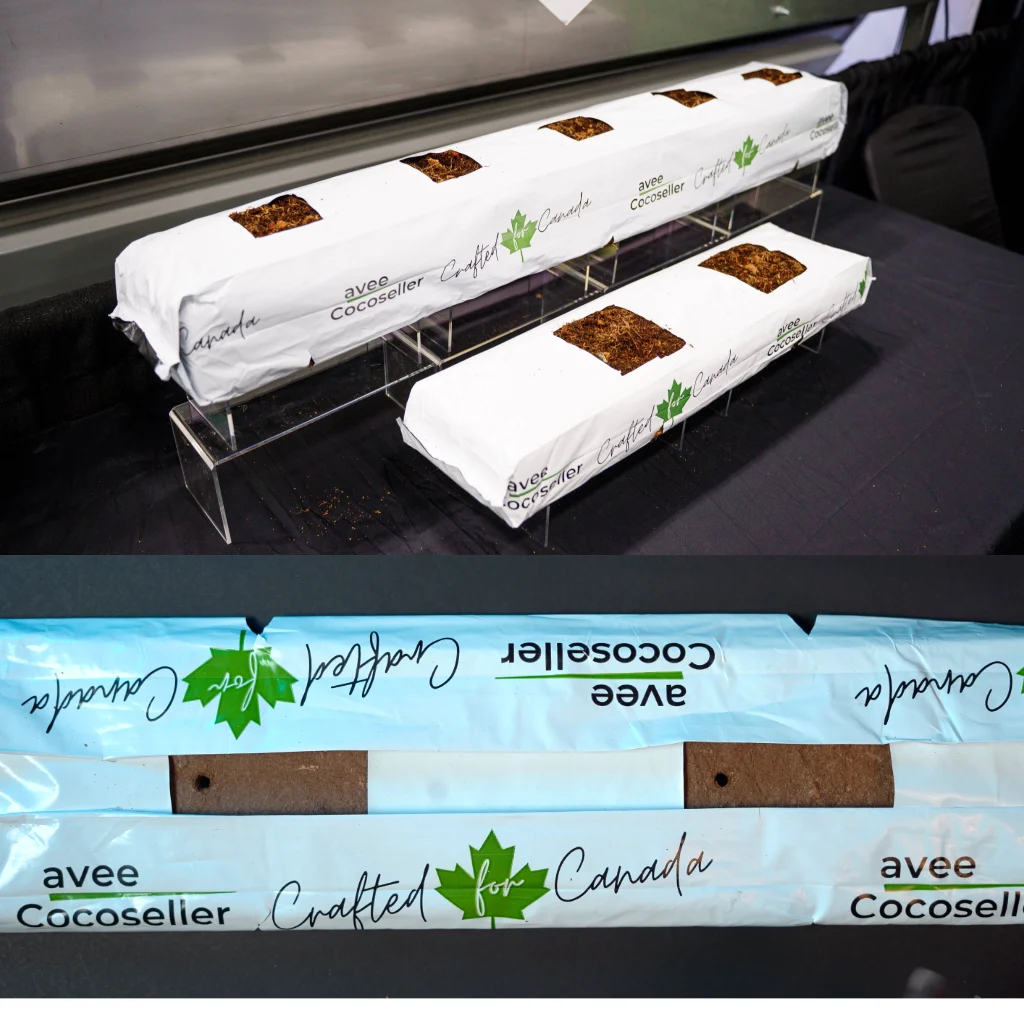
Coarse chip-to-pith blend for high-wire tomato production. High AFP under intensive drip cycles. Closed or open-top. Custom gutter sizing available for Ontario and BC builds.
Engineered for Leamington high-wire production, Kingsville commercial operations, and US greenhouse tomato clusters. Coarse chip-to-pith blend. Open-top available for crop steering. EC < 0.5 mS/cm, pre-buffered, lab-tested — same-week dispatch from Ontario.
Leamington, Ontario has the largest concentration of commercial greenhouses in all of North America — 1,969 acres of greenhouse vegetable production in the immediate area alone. Ontario accounts for 72% of all Canadian greenhouse vegetable output. In 2024, greenhouse tomatoes, peppers, and cucumbers combined to generate $2.5 billion in sales. This sector runs on substrate consistency, supply reliability, and zero batch surprises.
That is why substrate choice matters so much in this market. A single batch of high-EC or under-buffered coir does not just cost you one crop — it can set back an entire production bay for weeks. Avee supplies the substrate that serious Leamington operations can plan their growing season around.
Sources: Statistics Canada Greenhouse Survey 2024 · Agriculture and Agri-Food Canada 2024 · Wikipedia — Leamington, Ontario
Every parameter that matters for high-wire greenhouse tomato production — with the values Leamington and US commercial operations expect.
← Swipe for full table| Parameter | Avee Tomato Blend | Why It Matters for Tomatoes |
|---|---|---|
| EC Level | < 0.5 mS/cm (lab-tested) | Zero hidden salt load — your nutrient program starts from a clean inert baseline. High-EC substrate stresses transplants before your first feed. |
| pH Range | 5.5 – 6.5 (stabilised) | Tomatoes run best at feed pH 5.8–6.2. Avee substrate arrives within this band — no acidifying required before planting. |
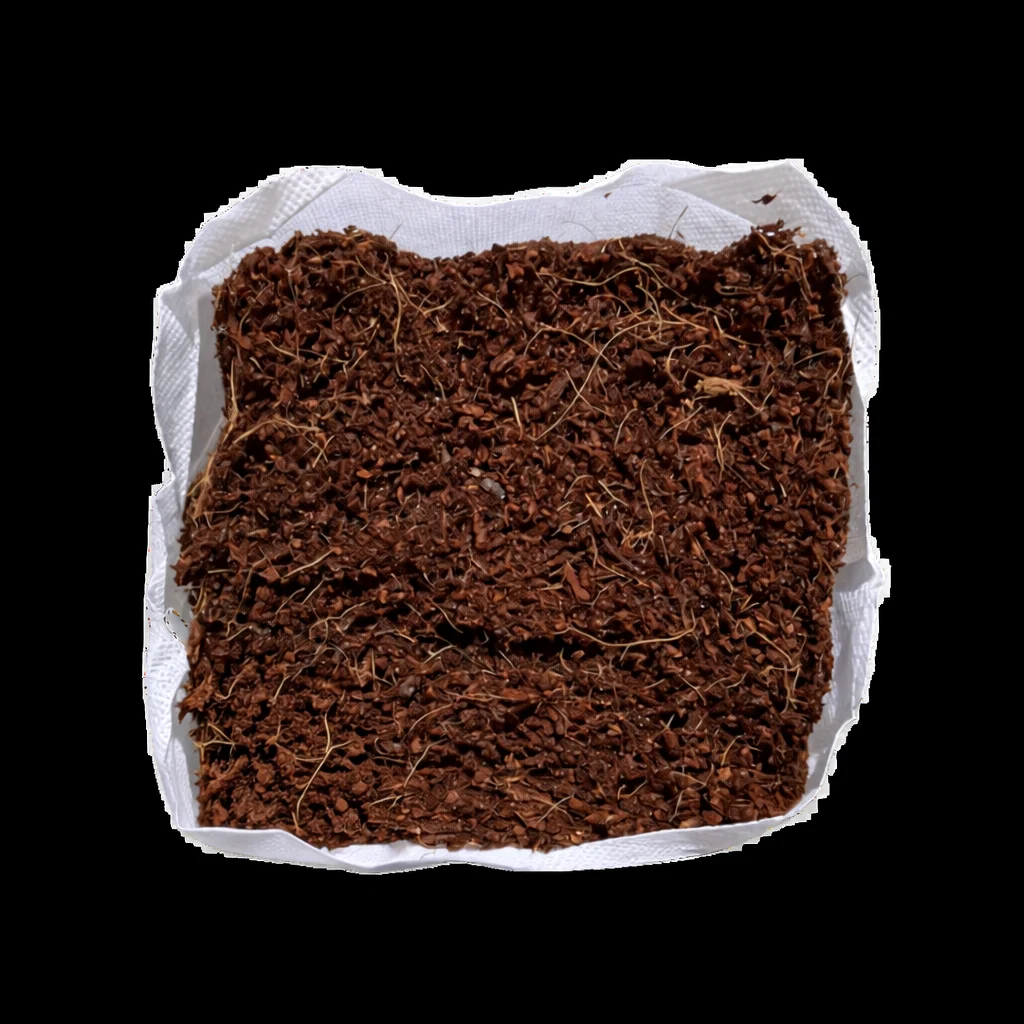
| Pith:Chip Ratio | Coarse — higher chip fraction | Coarser blends maintain Air Filled Porosity under intensive daily drip cycles — prevents root asphyxiation during peak Ontario summer production. |
| Bag Style | Closed or Open-Top (specify) | Open-top allows faster dry-down between irrigations — essential for pushing plants generative during heavy fruit load. Closed retains more moisture for early-season veg push. |
| Plants per Bag | 3–4 plants per 100cm bag | Standard Canadian high-wire spacing. Cold-climate Ontario: 18L. Warmer US operations or summer peak: 25–29L. Custom volumes on request. |
| Buffering | Calcium pre-buffered at source | Raw coco binds calcium and magnesium — causing deficiencies even when both are in your feed. Avee coco is plant-ready from the moment it arrives. |
| Wash cycles | Triple-washed | Three-pass washing achieves ultra-low residual sodium and chloride — the two salts most damaging to tomato root zones at high concentration. |
| Gutter sizing | Standard + custom available | Sized for standard Canadian greenhouse gutters. Custom dimensions for non-standard older builds in Leamington and BC — no adapter rails required. |
| Reuse cycles | 2–3 full tomato seasons | After sterilization and re-buffering, substrate runs another full season. Three seasons vs single-use rockwool equals up to 60% reduction in substrate cost per harvest. |
| Origin and dispatch | South India → Ontario → You | Factory-direct from our own manufacturing in South India. Stocked in Cambridge, Ontario. Same-week dispatch — no overseas freight wait for Canadian growers. |
Crop steering is the practice of adjusting irrigation timing, volume, and EC to direct your tomato plants between vegetative growth and generative growth. Coco coir's medium Cation Exchange Capacity of 10 to 30 meq per 100g makes it well suited to this approach — responsive enough for rapid steering shifts, yet forgiving enough to buffer minor feed inconsistencies.
Keep the root zone consistently moist. High VWC signals the plant to focus energy on canopy and root development rather than reproduction.
Create mild root zone stress to signal the plant to prioritise reproduction over vegetative growth. Higher EC creates gentle osmotic pressure. Larger dryback overnight triggers truss development and fruit set.
The setup workflow used by commercial tomato operations in Leamington, Kingsville, and US greenhouse clusters — with the specific prep steps that apply to Avee pre-buffered substrate.
The shift away from rockwool in commercial tomato production is driven by agronomic data, not just sustainability mandates. Here is what the research shows, and what it means for Canadian and US greenhouse operations.
Peer-reviewed research shows coco coir significantly increases individual fruit weight and total fruit yield compared to rockwool in greenhouse tomato production. This is driven by higher potassium and sulphur uptake, and improved photosynthesis rates in coco-grown plants.
Source: PMC5539188 — Comparison of Coconut Coir, Rockwool and Peat for Tomato Production
Coco coir maintains Air Filled Porosity of 28 to 95% depending on blend composition — even under intensive daily drip irrigation cycles. Rockwool achieves good AFP but loses structural integrity over time and cannot be reused. Coco's fibrous structure holds its shape through multiple seasons.
Source: Discover Sustainability (2025) — Coir Substrates and Tomato Physiology
Coco coir's Cation Exchange Capacity of 10 to 30 meq per 100g sits between rockwool and peat. It buffers enough to absorb minor feed inconsistencies, yet responds fast enough to execute precise crop steering shifts between vegetative and generative growth.
Source: HortGrow Solutions — Coco Coir as a Medium-CEC Substrate
Rockwool is a single-use substrate — after harvest, it goes to landfill. Coco coir runs 2 to 3 full tomato seasons with proper sterilization. For a Leamington operation running two cycles per year, this means substrate cost drops by up to 60% from season one to season three.
Source: Pelemix Tomato Grow Bags Technical Guide
Rockwool is synthetic mineral fibre that generates significant landfill waste. Coco coir is a renewable agricultural byproduct. As Canadian and US greenhouse operations face increasing ESG reporting requirements and sustainability certification pressure, coco coir is the clear substrate choice — with no performance compromise.
Source: Industry sustainability reporting standards — Canada and USA
Other coco coir suppliers ship on import lead times of 6 to 12 weeks from overseas. Avee stocks in Cambridge, Ontario. For Leamington operations planning their next season, this means you order when you need it — not three months in advance. Same-week dispatch across Canada and into all US states.
Source: Avee Cocoseller — Cambridge, Ontario warehouse
Most Popular
Coarse chip-to-pith blend for high-wire tomato production. High AFP under intensive drip cycles. Closed or open-top. Custom gutter sizing available for Ontario and BC builds.
Steering
Exposed coir surface for maximum dry-down speed between irrigations. The preferred bag style for Leamington high-wire tomato production — faster dryback means cleaner generative steering during fruit load.
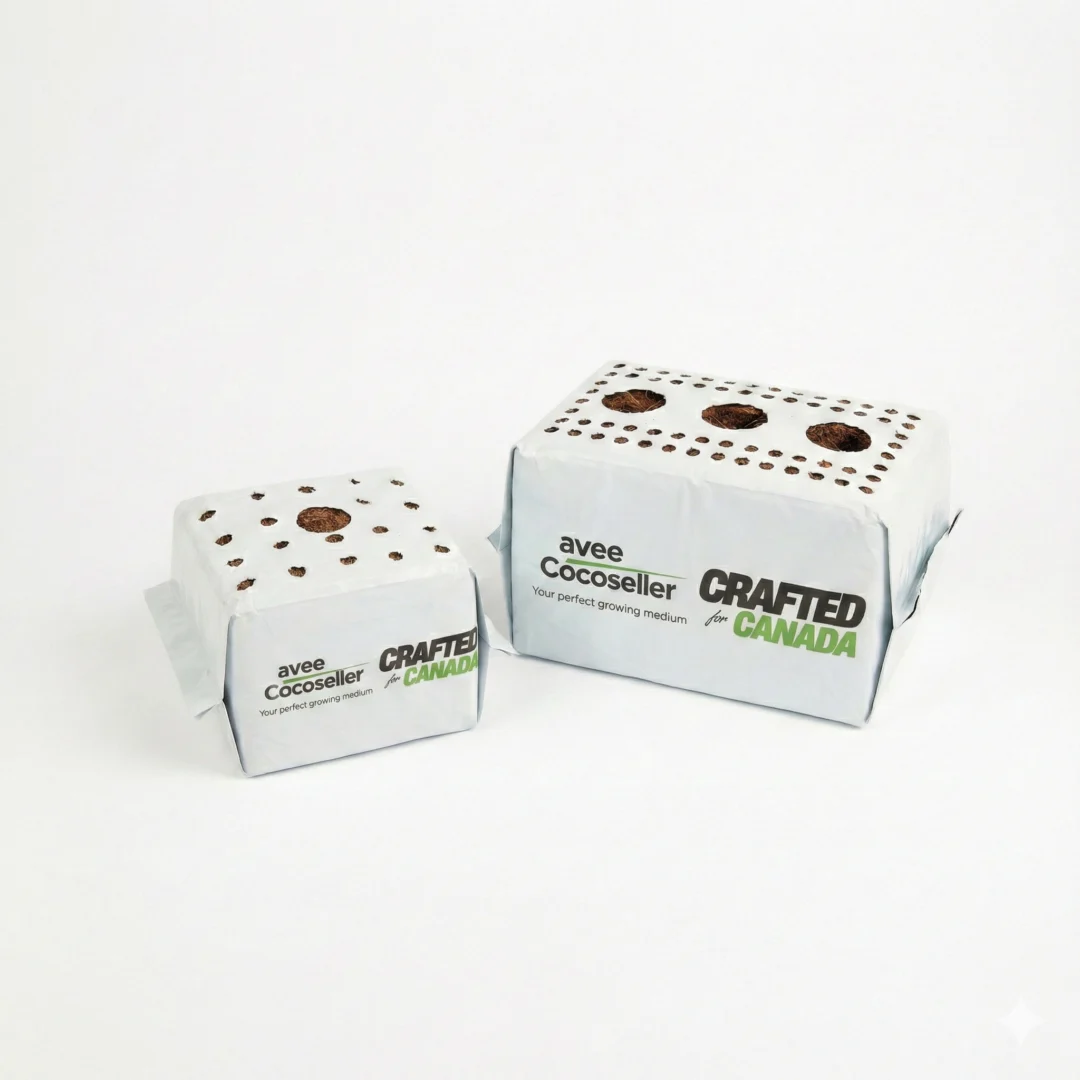
Coco coir propagation cubes for tomato seedlings. Uniform moisture across every cube for batch-consistent root development. Transplant directly into grow bags with zero root-zone medium mismatch.
Same-week dispatch from Cambridge, Ontario to every major tomato production cluster in Canada — and cross-border into the US greenhouse tomato sector.
Leamington, Kingsville, and Essex County represent the highest concentration of commercial greenhouses in North America — over 1,969 acres. Our Cambridge warehouse is under three hours away. Same-week dispatch, 24 to 48 hour delivery on standard orders. Custom-sized bags for Leamington gutter systems. Batch documentation with every commercial pallet.
Niagara-on-the-Lake, Jordan Station, and Lincoln support significant greenhouse tomato and pepper production. Direct from our St. Catharines and Cambridge base — this is our home region. Fastest dispatch of all. Available for local pickup in St. Catharines if required.
BC's greenhouse tomato sector — Abbotsford, Surrey, Delta, Langley — ships from Ontario with competitive freight times. BC's peat-free sustainability mandates make coco coir the logical substrate choice. We supply BC operations with peat-free certified substrate and full batch documentation.
US commercial greenhouse tomato operations in Michigan, Ohio, California, New York, and Florida order direct from our Ontario warehouse. Cross-border freight with complete import documentation. Factory-direct pricing is frequently competitive vs US domestic suppliers — particularly at pallet volumes.
Leamington and Ontario high-wire tomato operations need a coarse chip-to-pith blend with high Air Filled Porosity. Open-top bags are the preferred choice — the exposed coir surface allows faster dry-down between irrigations, making it easier to push plants into generative growth during heavy fruit load. Avee bags are sized for standard Canadian greenhouse gutter widths, with custom dimensions available for non-standard older Leamington builds.
Vegetative phase: EC 2.0 to 2.5 mS/cm, pH 5.8 to 6.2. Generative phase during fruit load: EC 3.0 to 3.5 mS/cm, pH 5.8 to 6.2. Monitor drain EC weekly — if drain EC is rising above your input EC, reduce input EC slightly or increase daily drain percentage to 15 to 20%. Avee substrate arrives below EC 0.5 mS/cm, giving you a clean inert baseline with no hidden salt load from the substrate itself.
Standard Canadian greenhouse practice is 3 to 4 plants per 100cm grow bag. For cold-climate Ontario high-wire production, 18L bags are standard. For US greenhouse operations running warmer climates or summer peak periods, 25 to 29L bags provide more root volume buffer and reduce irrigation frequency requirements.
No. Raw coco coir naturally sequesters calcium and magnesium from your feed solution — causing deficiencies even when both nutrients are present in your water. Avee coco is calcium pre-buffered at the processing stage in South India, eliminating the need for a manual buffering step. This saves 6 to 12 hours of labour per season and removes one of the most common substrate preparation errors in commercial tomato growing.
Open-top bags have no top seal — the coir surface is exposed to air, dramatically accelerating evaporation and enabling faster dry-down between irrigations. For Leamington high-wire tomato production, open-top bags are the preferred choice because faster dryback allows cleaner generative steering during heavy fruit load. Closed bags retain more moisture — better for early-season vegetative establishment or operations that prefer more irrigation buffer.
Yes. After final pick, remove old root mass mechanically or with enzyme cleaners. Sterilize with 3% hydrogen peroxide, flush until drain EC drops below 1.0 mS/cm, and re-buffer with cal-mag solution. Properly maintained Avee bags run 2 to 3 full tomato seasons — reducing substrate cost per harvest by up to 60% compared to single-use rockwool.
Published research shows coco coir significantly increases potassium and sulphur uptake, photosynthesis rates, individual fruit weight, and total fruit yield compared to rockwool in greenhouse tomato production. Additionally, coco's medium Cation Exchange Capacity makes crop steering more forgiving than rockwool's near-zero CEC — a meaningful advantage in high-density commercial operations where substrate errors compound quickly across large bays.
Same-week dispatch from Cambridge, Ontario. Leamington, Kingsville, and Essex County operations typically receive within 24 to 48 hours. Niagara Region is our home base — fastest of all. BC, Alberta, and Atlantic Canada ship same week. US greenhouse tomato operations ship same week with full cross-border freight documentation. Contact us before your planting window to confirm timing on volume orders.
We supply tomato greenhouse operations at every scale — from single-bay to large commercial Leamington facilities. 24-hour response on all wholesale inquiries.
Coarse chip-to-pith blend. Open-top bags for crop steering. Custom gutter sizing. Lab-tested EC less than 0.5 every batch. Pre-buffered at source. Factory-direct pricing — for tomato operations from Leamington to California.