 Skip to main content
- Home
- About
-
Grow mediaCoco peat blocks Bulk loose coir pith Coco husk chipsGrow bagsCoir grow bags Open-top grow bagsPropagationSeed starter pellets Propagation cubes Coir fibre bales View all products →
-
By cropCannabis Tomatoes StrawberriesBy applicationGreenhouse Horse bedding Mushroom substrate All solutions →
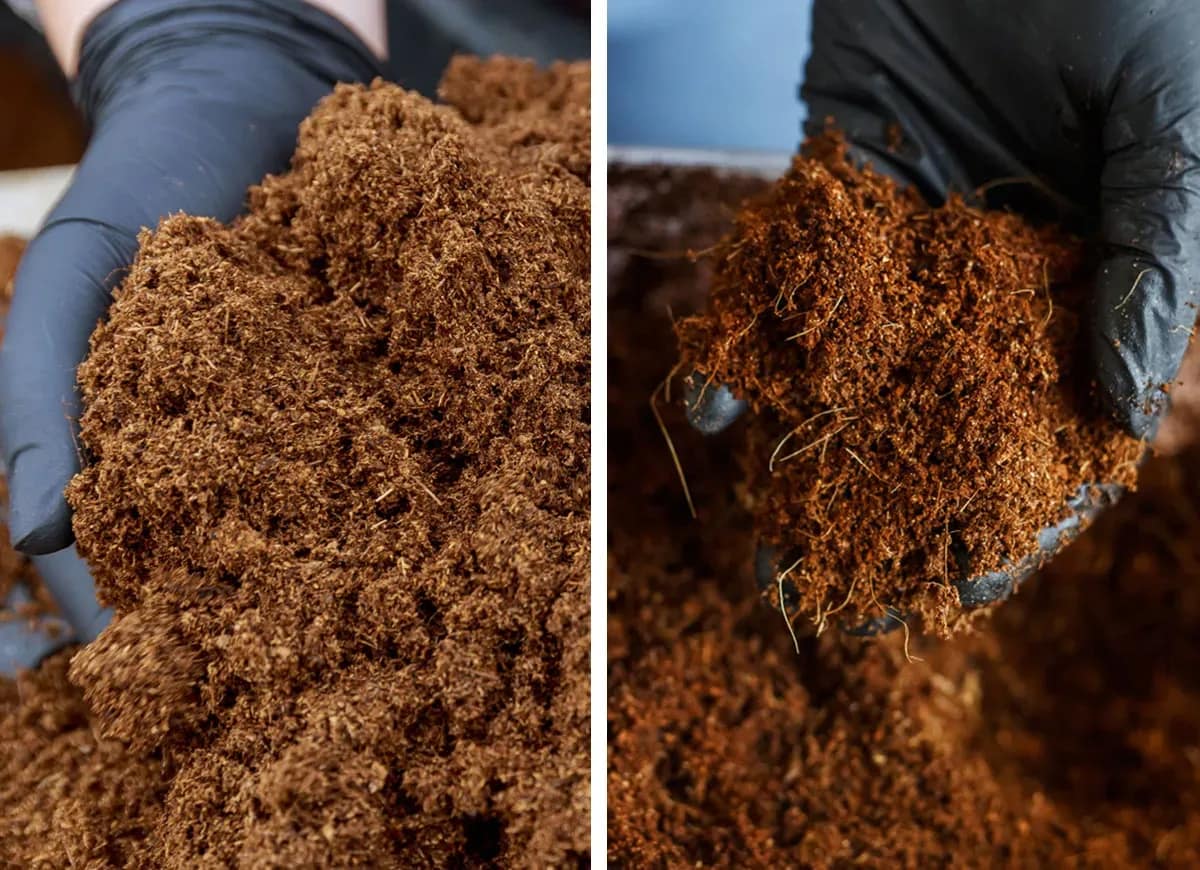
Coco Coir vs Peat Moss: Which Is Better for Canadian Growers?
If you're scaling up a grow operation in Canada — whether that's cannabis, microgreens, vegetables, or strawberries — the growing medium you choose affects everything: pH management, water costs, drainage, and your bottom line.
Peat moss has been the default for decades. But coco coir is rapidly replacing it in commercial facilities across Ontario, BC, and Alberta. This guide breaks down exactly why — and when peat moss might still make sense for your operation.
What Is Coco Coir?
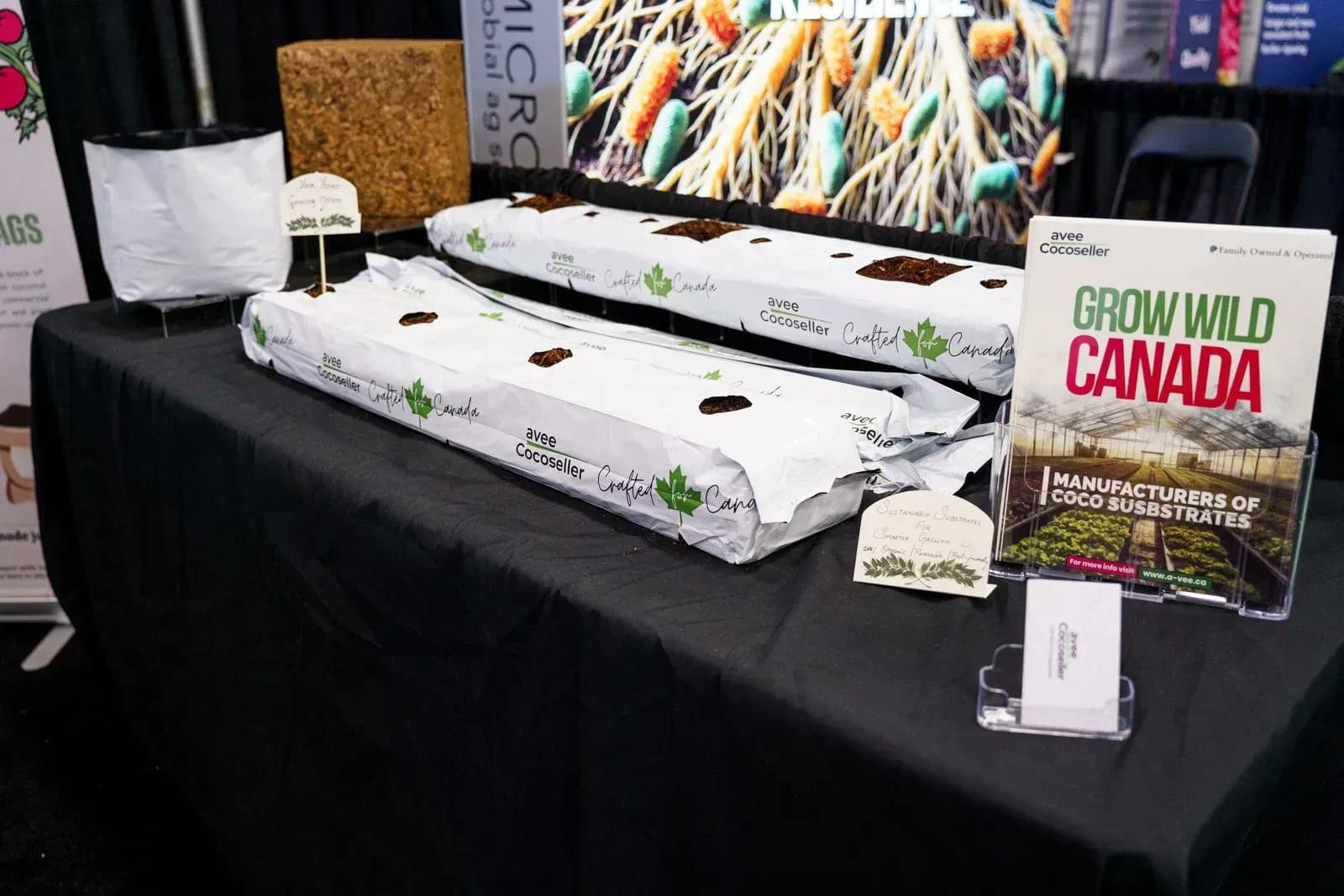
Coco coir is made from the fibrous husk of coconut shells — a natural by-product of the coconut industry. After processing, it's compressed into bricks, chips, or loose bags and shipped worldwide. What was once agricultural waste is now one of the most popular growing media in professional horticulture. For a full breakdown of how it's manufactured, its different types, and every commercial use case, see our complete coco coir guide.
It comes in three forms, each with different properties:
- Coco pith — fine texture, high water retention. Great for seedlings and propagation.
- Coco fibre — long strands that improve aeration and drainage. Adds structure to blends.
- Coco chips — chunky pieces that hold moisture while maintaining large air pockets. Popular for cannabis and orchids.
What Is Peat Moss?
Peat moss is partially decomposed sphagnum moss harvested from bogs — primarily in Canada and the northern United States. Canada is actually the world's largest producer, with vast deposits in Quebec and the Maritimes.
It's been a grower's staple for over 50 years: affordable, widely available, and excellent at retaining moisture. Most commercial potting mixes in North America are peat-based. So why are commercial growers switching away from it? For a practical overview of the changing peat landscape, see our peat-moss transition guide.
Head-to-Head Comparison
| Property | Coco Coir | Peat Moss |
|---|---|---|
| Natural pH | 5.8 – 6.8 (near-neutral) | 3.5 – 4.5 (very acidic) |
| Drainage & aeration | Excellent | Poor without amendments |
| Water retention | High with fast drainage | Very high — can waterlog |
| Reusability | Depends on crop history and substrate condition | Assess disease risk and physical condition |
| Sustainability | Renewable by-product | Non-renewable (1,000yr bogs) |
| Buffering needed | Cal-Mag before first use | Dolomitic lime to raise pH |
| Cost at pallet scale | Lower per cycle | Higher per cycle |
| Best for | Cannabis, hydroponics, fertigation | Seedling mixes, hobby grows |
Why Commercial Growers Are Making the Switch
1 pH Stability — Less Correction Work
Peat moss has a natural pH of 3.5 to 4.5. That's far too acidic for most crops. To use it, growers must add dolomitic lime and wait for stabilisation — adding cost, time, and guesswork to every fresh batch.
Buffered coco coir sits between 5.8 and 6.8 — right in the sweet spot for nutrient uptake. Once buffered with calcium and magnesium, it holds that range consistently. For commercial operations running hundreds of plants, this means fewer deficiencies, less intervention, and more predictable results run after run.
Switching to coco cut our pH adjustment time in half. We stopped chasing deficiencies and started focusing on yield.
2 Drainage and Root Aeration
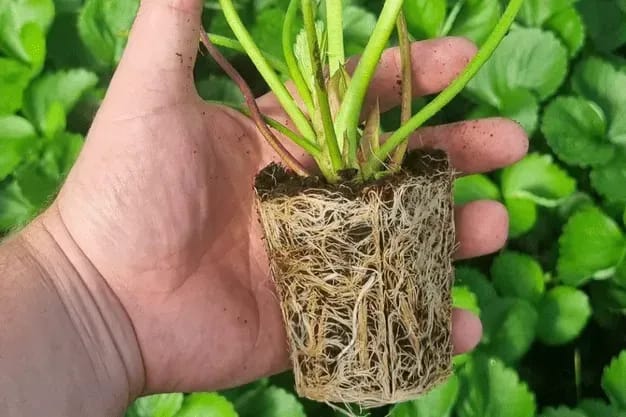
Peat moss retains moisture very well — sometimes too well. In high-volume commercial setups with frequent watering or automated fertigation, it can stay waterlogged, cutting off oxygen to roots and creating anaerobic conditions that invite root disease.
Coco coir holds water while simultaneously maintaining excellent drainage. Its fibrous structure keeps air pockets open even when saturated. This is why it's the go-to medium for high-frequency fertigation used in cannabis production and hydroponic vegetable growing.
3 Sustainability — Critical for Licensed Producers
Peat bogs take over 1,000 years to form and act as significant carbon sinks. Harvesting them releases stored carbon and permanently destroys the ecosystem. The EU has already moved to restrict peat use in horticulture, and regulatory pressure is growing in Canada.
Coco coir is a renewable by-product of coconut production — material that would otherwise be discarded. For licensed cannabis producers and operations with ESG requirements, coco coir is an easy win on sustainability reporting.
Note for cannabis LPs: Health Canada's sustainability framework is increasingly influencing how licensed producers source inputs. Switching to coco coir now positions your operation ahead of where regulations are heading.
4 Lower Cost Per Cycle at Scale
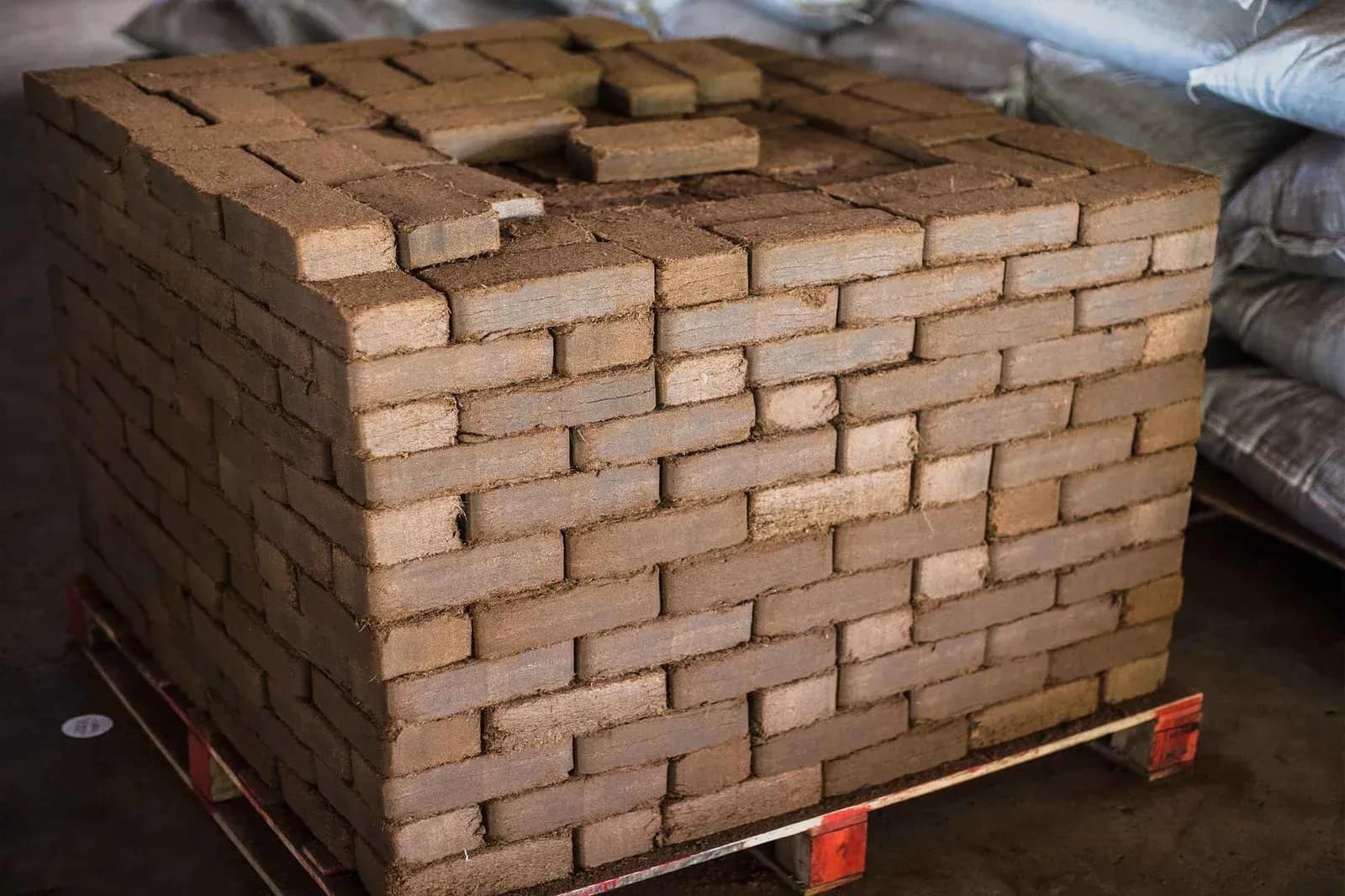
At small quantities, peat moss can appear cheaper per litre. But at pallet and bulk scale, the math shifts. Compressed coco bricks expand 5–8× their volume, reducing shipping weight and warehouse space significantly. Do not assume a fixed number of reuse cycles or a guaranteed cost advantage. Compare quoted costs and only allow for reuse after a crop-history, chemistry and structure assessment.
When Peat Moss Might Still Make Sense
Coco coir is not automatically the right choice for every application. Peat moss still has a place in some operations:
When peat still makes sense
- Traditional potting soil blends for retail garden centres expecting peat-based mixes
- Seed-starting mixes for crops that prefer naturally higher acidity
- Low-tech hobby grows where automated fertigation isn't used
- Blueberry and rhododendron production where acidic conditions are desirable
If you're running an automated, data-driven commercial facility, peat is the legacy choice — not the optimal one.
Coco Coir Wins for Canadian Commercial Growers
For most commercial applications in Canada — cannabis, hydroponics, controlled-environment agriculture, vertical farming — coco coir outperforms peat moss on pH stability, drainage, reusability, and sustainability. The learning curve is small (buffering with Cal-Mag before first use), and the operational gains at scale are significant. The growers we work with at Avee Cocoseller consistently report fewer root problems, more stable nutrient uptake, and lower input costs per cycle after making the switch.
Ready to Switch to Coco Coir?
Factory-direct bulk and pallet supply. Fast shipping to commercial growers across Canada and the USA from Cambridge, Ontario.