Avee Cocoseller — Header
Lab-Tested · Factory-Direct Ontario Stocked Ships to Canada, USA & Mexico
🇨🇦 CA·🇺🇸 US·🇲🇽 MX
Cambridge, Ontario Stocked  ·  Ships Canada, USA & Mexico
In Stock — Cambridge, Ontario

Coco Coir for Peppers & Cucumbers — Canada, USA & Mexico

Steering-grade coco slabs and grow bags for greenhouse pepper and high-wire cucumber production. Leamington and Kingsville, BC and Alberta, the US Midwest and Sun Belt, and Mexico's protected-agriculture export sector. Washed low-EC, pre-buffered, blended for the dryback control peppers demand and the root-zone oxygen cucumbers can't live without. Lab-tested, stocked one hour from Leamington in Cambridge, Ontario.

🫑 Peppers · 🥒 Cucumbers Steering-Grade Slabs High-Wire & V-System 2–3 Crops per Year Washed Low-EC Pre-Buffered CA · US · MX
🫑 Leamington & Kingsville Pepper Growers 🥒 High-Wire Cucumber Ready — Oxygen-Rich Blends Steering-Grade — Precise Dryback Control 🇨🇦 Cambridge, Ontario — One Hour from Leamington 🇺🇸 Michigan, Ohio, Texas & Arizona Growers 🇲🇽 Sinaloa & Querétaro — Shipping Expanding Slabs · Open Tops · Custom Blends Rockwool Switch? Compostable Disposal Reusable 2–3 Crop Cycles
#1Leamington–Kingsville
Densest GH Cluster in N. America
Ontario greenhouse belt
~4,000Acres of Ontario Greenhouse
Vegetable Production
OGVG sector data
#1 to USAMexico: Top Supplier of Fresh
Peppers & Cucumbers to the US
USDA trade data
2–3Cucumber Crops per Year
Same Slabs, Reused
Standard practice
3 / slabPepper Plants per Slab
Double-Stemmed to 6 Heads
Industry standard
What Growers Say

Trusted by Pepper & Cucumber Growers in Ontario, the US & Mexico

"We run bell peppers on a V-system in Kingsville and moved two bays from rockwool to Avee coco slabs as a trial. Generative steering took a little recalibration, but the buffer against our fertigation hiccups is real — and at teardown we composted the slabs instead of paying to landfill rockwool. The whole range is on coco next season."

M
M. Vanderberg Greenhouse Bell Pepper Grower — Kingsville, Ontario

"High-wire cucumbers are brutal on a substrate — three crops a year, heavy irrigation, and Pythium waiting for any waterlogged slab. Avee's chip-blend slabs kept the root zone oxygenated through summer, and the second crop went into the same slabs after a flush with zero issues. Delivery from Ontario cleared customs without us touching the paperwork."

S
S. Novak High-Wire Cucumber Operation — Northwest Ohio, USA

"Our protected pepper program in Querétaro exports year-round to the US, so substrate consistency isn't optional. Every Avee batch arrived with the lab sheet, the washed EC matched it, and the slabs wet up evenly across the house. That predictability is why we standardised on them for the new hectares."

D
D. Fuentes Protected Pepper Export Program — Querétaro, Mexico

North America's Greenhouse Capital Runs on Substrate — and Coco Is Taking the Slab.

The Leamington–Kingsville belt in Essex County holds the densest concentration of greenhouses in North America, and Ontario's roughly 4,000 acres of protected vegetables are dominated by three crops: tomatoes, peppers, and cucumbers. Every one of those acres grows in soilless slabs on drip fertigation — and the substrate decision is made per crop cycle, every cycle.

Rockwool built this industry, but coco coir is winning the re-order. Coco slabs deliver the same steering precision with a cation buffer that forgives fertigation faults, reuse across 2–3 cucumber crops in a year, and end-of-crop disposal that means composting — not paying landfill fees for synthetic fibre. The same shift is running through Michigan and Ohio's new builds and through Mexico's export houses in Sinaloa and Querétaro, where coco is already the default.

Context: Ontario Greenhouse Vegetable Growers · Essex County greenhouse belt · USDA fresh vegetable trade data

Critical: Peppers Need Steering Control. Cucumbers Need Oxygen. The Blend Is Not the Same.

Peppers are a steered crop — growers push vegetative or generative balance through controlled drybacks and feed EC of roughly 2.5–3.5 mS/cm. That takes a slab with predictable, uniform dry-down behaviour. Cucumbers are a speed crop — 2–3 plantings a year under heavy irrigation, where the killer is a waterlogged, oxygen-starved root zone and the Pythium that follows it.

One generic slab does not serve both. Avee blends the pith:chip ratio per crop — a balanced steering blend for peppers, a chip-forward high-porosity blend for cucumbers — washed low-EC, calcium pre-buffered, and lab-documented per batch so the slab behaves the same in bay one and bay forty.

Avee slabs: blended per crop, lab-tested every batch — Cambridge, Ontario, one hour from Leamington
2.5–3.5Typical pepper feed EC range in mS/cm — steering demands slab uniformity
2–3Cucumber crops per year — coco slabs flush and replant, rockwool doesn't
$0Landfill disposal fees for coco — spent slabs compost or spread to field
1 hrFrom our Cambridge warehouse to the Leamington greenhouse belt
Who We Supply

Coco Coir for Every Pepper & Cucumber Grower — Canada, USA & Mexico

We supply pepper and cucumber operations at every scale — from the Leamington belt an hour from our warehouse, to US Midwest and Sun Belt builds, to Mexico's export programs where coco is already the standard.

Canada — Home TurfLeamington & Kingsville, ON

Essex County Greenhouse Belt

The densest greenhouse cluster in North America sits one hour from our Cambridge warehouse. Leamington and Kingsville pepper and cucumber operations get the fastest slab resupply in the industry — 24 to 48 hour delivery windows, crop-specific blend ratios, and lab sheets with every batch. No container schedules, no offshore lead-time gambles mid-crop.

24–48 hrDelivery window
Per-cropBlend ratios
Lab sheetEvery batch
Canada — Coast to CoastBC · Alberta · Quebec

BC, Alberta & Quebec Greenhouse Growers

Delta and the Fraser Valley anchor BC's pepper houses, Alberta's Medicine Hat cluster grows cucumbers and peppers under some of Canada's sunniest skies, and Quebec's greenhouse expansion is adding vegetable acreage yearly. Avee ships coast to coast from Ontario with rail and road freight — full pallets to full truckloads.

Coast-wideRail & road freight
Pallet–FTLAny volume
Peat-freeSustainability ready
USA — CommercialMidwest & Sun Belt

US Greenhouse Pepper & Cucumber Operations

Michigan and Ohio host the fastest-growing greenhouse vegetable builds in the US — many run by the same operators expanding out of Leamington — while Texas, Arizona, and California grow peppers and cucumbers year-round under glass and shade. Avee ships cross-border from Ontario with full customs documentation handled end to end.

Ships USAAll states
Docs doneCustoms handled
Lab verifiedEC & pH certs
Mexico — Export SectorSinaloa · Querétaro · Sonora

Pepper & Cucumber Growers in Mexico — Wholesale Coco Coir

Mexico is the top supplier of fresh peppers and cucumbers to the US market, grown across a vast protected-agriculture sector in Sinaloa, Sonora, Querétaro, and San Luis Potosí — where coco slabs are already the default substrate. Avee is expanding freight lanes into Mexico and quotes factory-direct container loads for large programs. Contact us to confirm availability for your region.

ExpandingFreight lanes
ContainerFactory-direct quotes
Contact usConfirm availability
All Growing Methods

Coco Coir for Every Pepper & Cucumber System

Whether you run a V-system pepper house in Kingsville, high-wire cucumbers in Ohio, shade-house production in Sinaloa, or you're planning a switch off rockwool — Avee blends the slab to the system.

Peppers — Most Common
Leamington · Kingsville · Delta BC

V-System Pepper Production on Slabs

Greenhouse bell peppers grow on a V-system — typically three plants per slab, each double-stemmed to six productive heads, trained up twine over a 10–11 month crop. Peppers are heavily steered: growers push vegetative or generative balance through dryback depth and feed EC, which demands a slab with uniform, repeatable dry-down. Avee's balanced pepper blend delivers consistent steering response bay after bay, with the cation buffer rockwool can't offer when fertigation stumbles.

3 plantsPer slab, 6 stems
10–11 moCrop duration
BalancedSteering blend
Cucumbers — High Turnover
Ontario · Alberta · Ohio · Michigan

High-Wire & Umbrella Cucumber Systems

Cucumbers are the sprint crop of the greenhouse — 2 to 3 plantings a year under heavy irrigation, on high-wire or umbrella training. The root zone risk is oxygen starvation: waterlogged slabs invite Pythium and collapse a planting in weeks. Avee's chip-forward cucumber blend holds high air-filled porosity under intensive drip cycles, then flushes and replants for the next crop — the same slabs running multiple cycles per year.

2–3 cropsPer year, same slabs
Chip-forwardOxygen-rich blend
2–3 plantsPer slab
Protected — Export Standard
Sinaloa · Sonora · Querétaro

Shade House & Tunnel Production — Mexico

Mexico's export peppers and cucumbers grow across shade houses, macro-tunnels, and glasshouses — a protected-agriculture sector built around coco slabs and open-top bags from the start. Compressed coco ships dense to remote production zones and hydrates on site, and Avee supplies export-grade batches with the documentation year-round US-bound programs require.

CompressedShips dense, expands on site
Export gradeBatch documentation
Slabs & bagsBoth formats
Transitioning from Rockwool
All Regions

The Rockwool-to-Coco Switch

Most established pepper and cucumber houses grew up on rockwool — and the switch to coco is usually driven by three things: a root-zone buffer that forgives EC and pH excursions instead of amplifying them, slab reuse across cucumber cycles, and disposal. Spent rockwool is synthetic waste with real landfill costs; spent coco composts or spreads to field. Steering in coco takes a short recalibration — slightly deeper drybacks to hit the same generative signal — and Avee supports the transition with blend specs and trial-bay quantities.

BufferedForgives faults
CompostableNo landfill fees
Trial baysStart small
Technical Specifications

Avee Pepper & Cucumber Substrate — Full Spec Sheet

Every parameter that matters for commercial pepper and cucumber production — with the values Leamington, US, and Mexico operations require.

← Swipe for full table
Technical specs for Avee coco coir pepper and cucumber substrate
ParameterAvee Pepper & Cucumber BlendsWhy It Matters for These Crops
Blend RatioPer-crop — balanced for peppers, chip-forward for cucumbersPeppers steer best on a balanced pith:chip slab with uniform dry-down. Cucumbers under heavy irrigation need a coarser, higher-porosity blend to keep roots oxygenated. One generic slab compromises both — Avee blends to the crop and documents the ratio.
Starting ECWashed low-EC (lab-tested)Slabs must arrive clean so your feed program — not residual salts — sets the root zone. Every Avee batch is washed and lab-verified before dispatch from Cambridge, Ontario.
Feed EC RangePeppers ~2.5–3.5 · Cucumbers ~1.8–2.8 mS/cmPeppers run hotter feed and are steered through EC and dryback; cucumbers run leaner and faster. Coco's cation exchange buffers both programs against injector faults that would hit an inert slab at full strength.
pH Range5.5 – 6.5 (stabilised)Both crops feed at pH 5.5–6.0 in the root zone. Coco arrives in range and holds it — no lime conditioning period, plant on delivery.
Pre-BufferedCalcium pre-buffered at sourceRaw coco exchanges sodium and potassium for the calcium in your feed — a direct route to blossom-end rot in peppers. Avee slabs are buffered at processing, so the exchange is already done before the crop meets the slab.
Slab Format1m slabs, ~20–25L expanded (custom sizes available)Standard greenhouse gutters take 1-metre slabs at 3 pepper plants or 2–3 cucumber plants per slab, one dripper per plant minimum. Custom lengths and volumes for non-standard gutters on request.
Air-Filled PorosityHigh — chip fraction engineered per cropCucumber root zones fail from oxygen starvation before anything else; Pythium follows waterlogging. The chip-forward cucumber blend keeps AFP high through 2–3 intensive crop cycles per year.
Reuse Cycles2–3 crops per slab (cucumbers)Flush between plantings, verify drain EC, replant. Multi-cycle reuse cuts substrate cost per crop dramatically versus single-use rockwool — a structural cost advantage for high-turnover cucumber programs.
End-of-Crop DisposalCompost or spread to field — $0 landfillSpent coco is organic matter; spent rockwool is synthetic waste with hauling and landfill fees. Across a large Leamington range, disposal alone can justify the switch.
Setup Guide

How to Set Up Coco Coir for Peppers & Cucumbers — Slabs, Gutters and Steering

The complete setup workflow for commercial pepper and cucumber operations in Canada, the USA, and Mexico — with the crop-specific details that matter at the root zone level.

Match the Blend to the Crop — Peppers and Cucumbers Are Not the Same Slab Order a balanced steering blend for peppers and a chip-forward, high-porosity blend for cucumbers. Peppers need uniform, repeatable dry-down for steering; cucumbers need maximum root-zone oxygen under heavy irrigation. Avee documents the pith:chip ratio on every batch sheet so bay one and bay forty behave identically.
Running both crops? Order both blends — a compromise slab underperforms for each
Lay Slabs on the Gutter — Drainage Toward the Collection Channel Position 1-metre slabs on clean gutters with a slight fall toward drainage. Cut drain slits low on the down-slope side after saturation, not before — you want the slab fully wetted first. Standard density: 3 pepper plants per slab (double-stemmed to 6 heads) or 2–3 cucumber plants per slab, one pressure-compensating dripper per plant minimum.
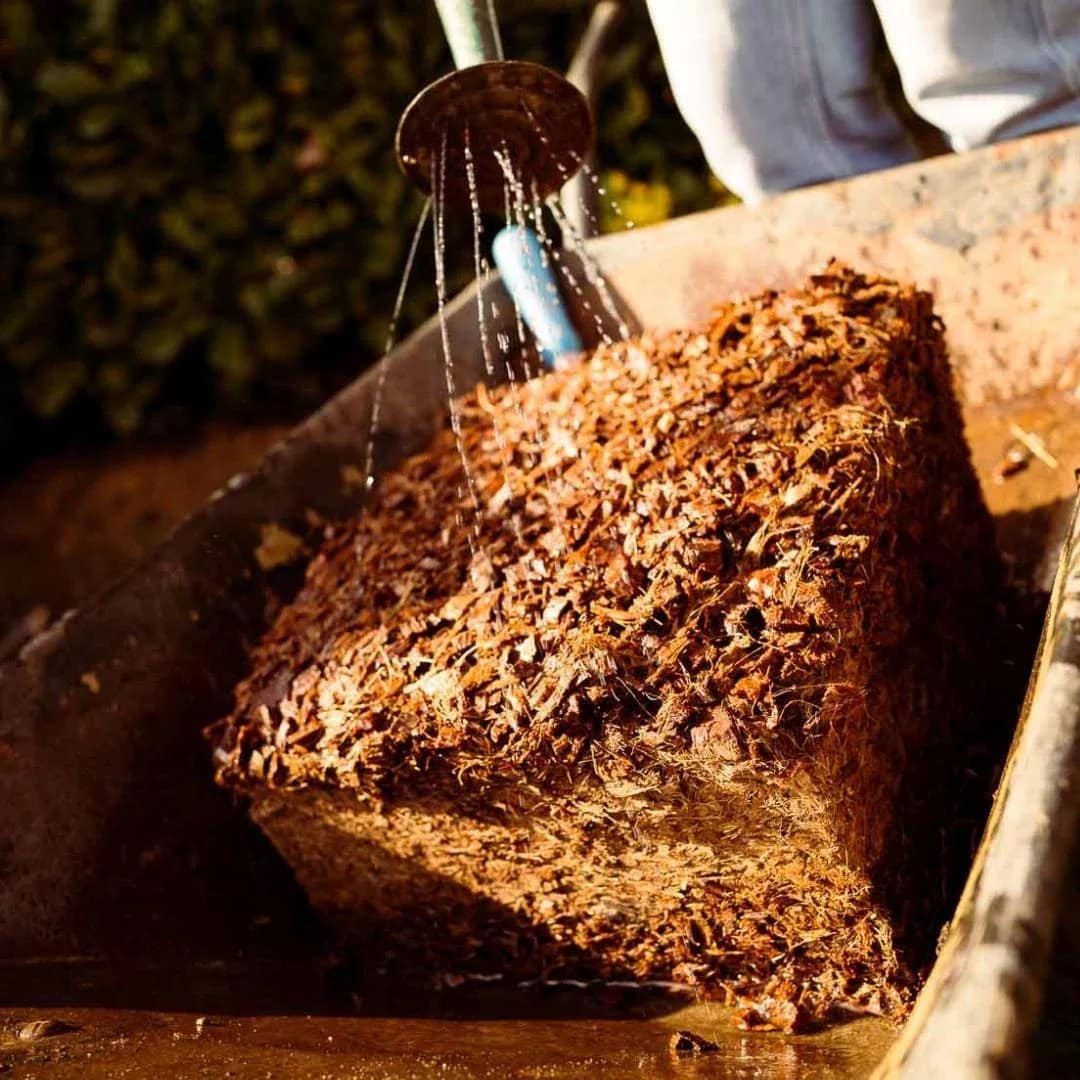
Saturate Fully, Then Cut Drainage and Verify EC Hydrate compressed slabs with feed solution until fully expanded and evenly wet — corners included — then cut drain slits and let the slab reach container capacity. Avee slabs arrive washed and buffered, so no conditioning soak is required, but run a drain EC check as final verification before planting.
Uneven wetting at setup causes dry pockets that haunt the whole crop — saturate before you cut
Plant and Establish — Gentle EC, Root the Block Into the Slab Set propagation blocks on the slab and run establishment feed until roots strike down into the coco. Keep early EC moderate and irrigation light — the goal in week one is root exploration, not top growth. Once rooted through, transition to your crop-stage feed program: peppers climbing toward 2.5–3.5 mS/cm, cucumbers holding a leaner 1.8–2.8 mS/cm.
Steer Peppers Through Dryback — Coco Reads Slightly Different From Rockwool Peppers are steered generative or vegetative through dryback depth, first-irrigation timing, and feed EC. Coco holds more readily available water than rockwool at the same volumetric reading, so growers switching typically run slightly deeper drybacks to land the same generative signal. Dial it in over the first weeks with substrate sensors — the response is uniform and repeatable once calibrated.
Switching from rockwool: expect a short recalibration, then equal or better steering control
Protect Cucumber Root Zones — Oxygen First, Always Cucumbers under summer light demand heavy irrigation, and the failure mode is a waterlogged, oxygen-starved slab followed by Pythium. Run frequent shorter cycles rather than fewer heavy ones, hold 10–20% daily drain, and let the chip-forward blend do its job. Watch drain EC weekly — rising numbers mean salt accumulation: increase drain percentage or flush with clean feed.
Wilting at midday with a wet slab = root zone oxygen problem, not a water shortage
Flush and Replant Cucumbers — or Compost at End of Crop Between cucumber plantings: remove root mass, flush slabs until drain EC drops to baseline, verify, and replant — the same slabs run 2 to 3 crops per year. At final teardown, spent coco composts or spreads to field as organic matter. No hauling contracts, no landfill fees, no synthetic waste stream — the quiet line item where coco beats rockwool every single year.
Cost your substrate per crop cycle, not per slab — reuse changes the math
Head-to-Head

Coco Coir vs Rockwool for Peppers & Cucumbers — Canada, USA & Mexico

Rockwool built the greenhouse vegetable industry, and it steers beautifully — that's the honest starting point. Here is where coco matches it, where coco wins, and why re-orders across the Leamington belt keep shifting to coir.

← Swipe for full table
Avee coco coir vs rockwool vs peat mixes for pepper and cucumber production
FactorAvee Coco Slabs 🇨🇦🇺🇸🇲🇽RockwoolPeat Mixes
Steering PrecisionExcellent once calibrated — uniform dry-downExcellent — the benchmarkPoor — compacts, uneven dry-down
Buffer Against Fertigation FaultsCation exchange absorbs EC/pH excursionsNone — inert slab passes faults straight to rootsSome buffering
Blossom-End Rot ProtectionCalcium pre-buffered at sourceDepends entirely on feed precisionVariable lime charge
Cucumber Multi-Crop Reuse2–3 crops per slab — flush and replantTypically single cropSingle use
Root-Zone Oxygen Under Heavy IrrigationChip-forward blend holds high AFPGood when managedWaterlogs — Pythium risk
End-of-Crop DisposalCompost or field-spread — $0 landfillSynthetic waste — hauling & landfill feesCompostable
Sustainability ProfileRenewable coconut byproduct — peat-freeEnergy-intensive melt-spun mineral fibreBog extraction — facing restrictions
Shipping & StorageCompressed — expands 4–5× on siteShips at full volume — bulkyCompressed bales available
Ships to USA & MexicoUSA live, Mexico lanes expandingImport-dependent, long lead timesRegional only
Products for Pepper & Cucumber Growers

Coco Coir Products for Every Pepper & Cucumber System

Get Slab Pricing →
Coco coir grow bag slabs for greenhouse peppers and cucumbers — Leamington Canada USA Mexico Most Popular
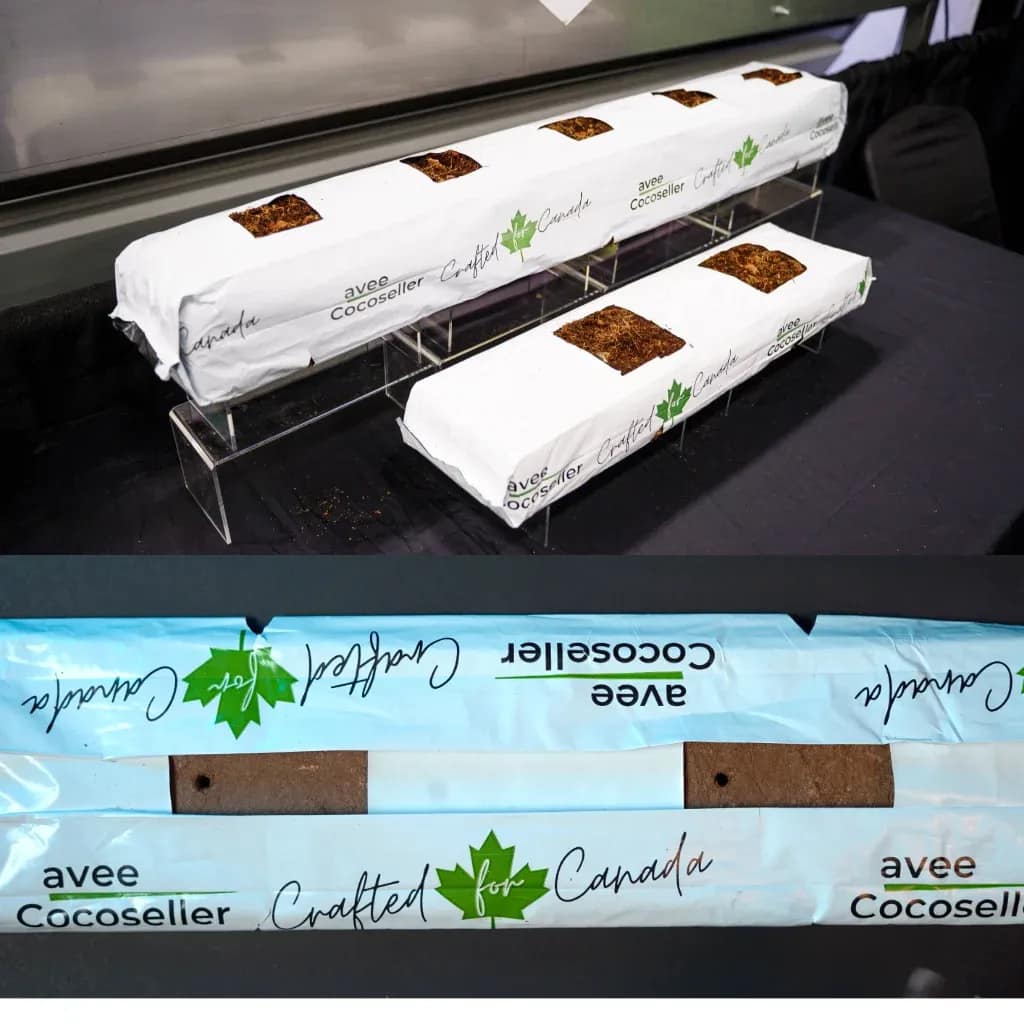
Coir Grow Bag Slabs — Pepper & Cucumber Blends

Standard 1-metre gutter slabs blended per crop — balanced steering blend for peppers, chip-forward high-porosity blend for cucumbers. Washed low-EC, calcium buffered, lab sheet with every batch. Custom lengths and volumes for non-standard gutters.

Per-crop blendDocumented ratio
1m slabs~20–25L expanded
Custom sizingAny gutter
View Grow Bags
Open top grow bags for pepper and cucumber shade house production — Canada USA Mexico
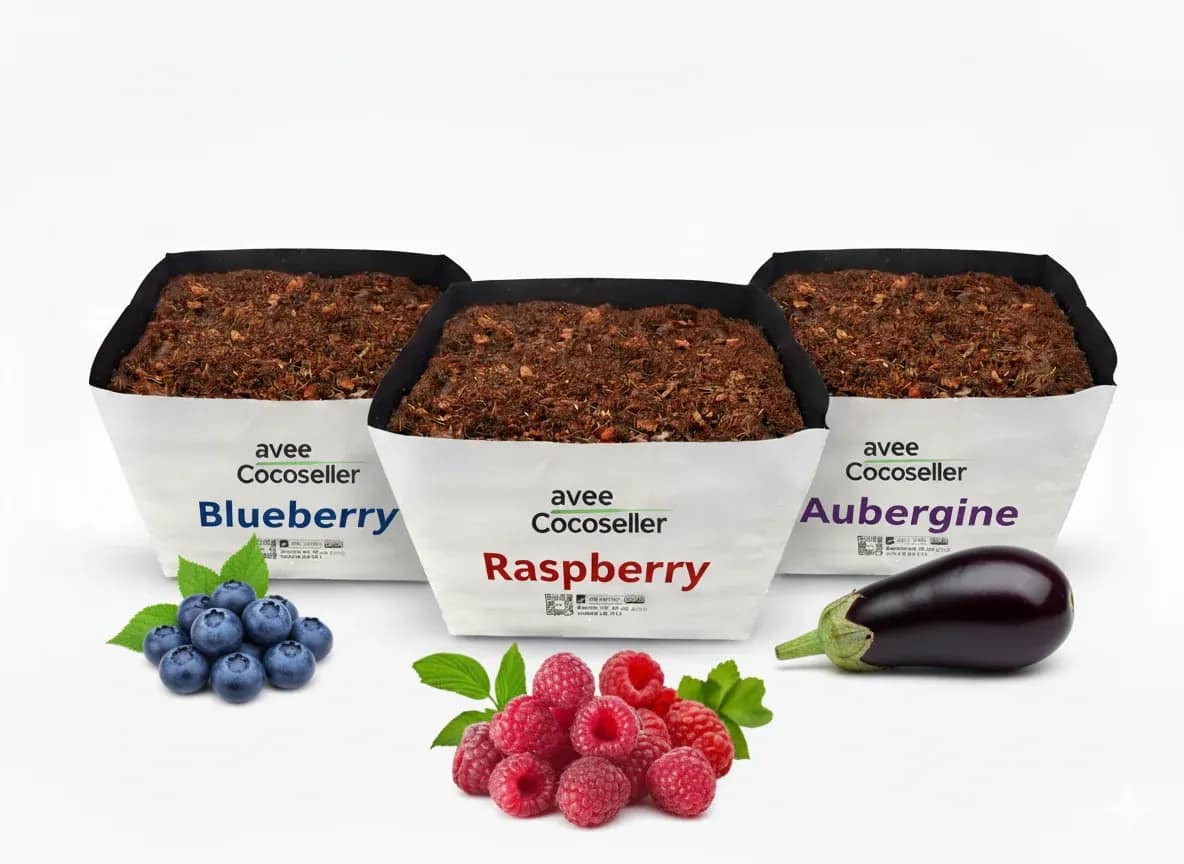
Open Top Grow Bags

Free-standing open-top bags for shade house, tunnel, and pot-culture pepper and cucumber production — the dominant format across Mexico's protected-agriculture sector. UV-stabilised film, pre-filled with your specified blend, ready to hydrate and plant.

Free-standingNo gutter needed
UV filmTunnel & shade house
View Open Top Bags
Coco husk chips for high porosity cucumber substrate blends — Canada USA Mexico
Coco Husk Chips

The oxygen fraction of the cucumber blend. Coarse-grade chips lift air-filled porosity for high-irrigation summer cycles and multi-crop reuse — available pure for on-farm blending or pre-mixed into slabs and bags at your specified ratio.

Coarse gradeHigh air porosity
Pure or blendedYour ratio
View Husk Chips
Where We Deliver

Pepper & Cucumber Substrate Delivered Across Canada, USA & Mexico

Same-week dispatch to every major greenhouse vegetable region in Canada, into key US states, and increasingly into Mexico — from Cambridge, Ontario, one hour from the Leamington belt.

🇨🇦
Canada — Greenhouse BeltLeamington · 24–48 hr delivery
Leamington Kingsville Niagara Delta BC Medicine Hat Quebec
🇺🇸
USA — Greenhouse StatesCross-border pricing on request
Michigan Ohio New York Texas Arizona California Virginia
🇲🇽
Mexico — Shipping ExpandingContact us to confirm availability
Sinaloa Sonora Querétaro San Luis Potosí Jalisco Baja California
Leamington & cross-border growers: Our Cambridge, Ontario warehouse ships 24–48 hours to the Essex County belt, same-week coast to coast in Canada, cross-border to Michigan, Ohio and the Sun Belt with full documentation, and Mexico shipping lanes are expanding. Contact us for freight pricing and batch documentation →
FAQ

Questions from Pepper & Cucumber Growers in Canada, the USA & Mexico

What is the best coco coir blend for greenhouse peppers?

A balanced pith:chip steering blend. Peppers are steered vegetative or generative through dryback depth and feed EC, which demands a slab with uniform, repeatable dry-down behaviour — enough pith for stable water holding, enough chip for drainage and re-wetting. Avee blends pepper slabs to this profile, documents the ratio on every batch sheet, and supplies custom ratios where your climate or irrigation strategy calls for it.

Chip-forward and high-porosity. Cucumbers run 2–3 crops a year under heavy irrigation, and the failure mode is a waterlogged, oxygen-starved root zone followed by Pythium. A coarser chip fraction keeps air-filled porosity high through intensive summer drip cycles and holds its structure across multiple plantings in the same slab.

Typical programs run peppers at roughly 2.5–3.5 mS/cm feed EC and cucumbers leaner at roughly 1.8–2.8 mS/cm, adjusted for light, stage, and steering strategy. Coco's cation exchange buffers both programs against injector faults — an EC spike that would hit roots at full strength in an inert slab is partially absorbed by the coir. Monitor drain EC weekly and adjust drain percentage to prevent accumulation.

Standard practice on 1-metre slabs: 3 pepper plants per slab, each double-stemmed to give 6 productive heads, or 2–3 cucumber plants per slab depending on variety and training system. Run at least one pressure-compensating dripper per plant. Send us your gutter spec and target stem density and we'll size slabs and volumes to match.

Yes — with a short recalibration. Coco holds more readily available water than rockwool at the same volumetric reading, so growers typically run slightly deeper drybacks to land the same generative signal. Once dialled in with substrate sensors over the first weeks, steering response is uniform and repeatable — and you gain a root-zone buffer against fertigation faults that rockwool cannot offer. We recommend starting with trial bays, and Avee supplies trial quantities with full blend specs.

Yes — this is one of coco's structural cost advantages. Between plantings: remove root mass, flush the slabs until drain EC returns to baseline, verify, and replant. The same coco slabs typically run 2–3 cucumber crops per year, where rockwool is generally single-crop. Costed per crop cycle rather than per slab, coco changes the substrate line in your budget.

Yes — Mexico is a priority market for us. Mexico is the top supplier of fresh peppers and cucumbers to the US, grown across a vast protected-agriculture sector in Sinaloa, Sonora, Querétaro, and San Luis Potosí where coco slabs are already the standard. Avee is expanding freight lanes into Mexico from Ontario and quotes factory-direct container loads for large programs. Contact info@a-vee.com to confirm current availability, lead times, and pricing for your region.

Our Cambridge, Ontario warehouse is one hour from the Leamington belt — Essex County operations typically receive within 24 to 48 hours, and the rest of Ontario within 2 to 4 business days. BC, Alberta, and Quebec ship same week. US states ship same week with full cross-border documentation handled by us, and Mexico lanes are expanding. Contact us before your planting window to lock in timing on volume orders.

Ready to Order?

We supply pepper and cucumber operations at every scale — from single-bay trials to full ranges across the Leamington belt, the US, and Mexico's export sector.

  • Per-crop blends — steering-grade for peppers, chip-forward for cucumbers
  • Washed low-EC — lab-tested every batch
  • Calcium pre-buffered — blossom-end rot protection built in
  • 2–3 crop reuse on cucumber slabs — flush and replant
  • Compostable disposal — no rockwool landfill fees
  • 24–48 hr delivery to Leamington & Kingsville
  • US shipping live, Mexico lanes expanding
Get Pepper & Cucumber Quote →
In Stock — Cambridge, Ontario · Ships Canada, USA & Mexico

Wholesale Pepper & Cucumber Substrate for Canada, USA & Mexico

Per-crop blends. Washed low-EC. Calcium pre-buffered. Lab-tested every batch. For V-system peppers, high-wire cucumbers, and shade-house production from Leamington to Michigan, and export programs across Mexico.

or reach us directly